Free Hot Springs In Iceland: Where To Soak Without Paying
Iceland sits on so much geothermal heat that warm water surfaces all over the country, and a surprising amount of it costs nothing. Here is what is genuinely free, what only looks free, and how to plan a soaking day trip from the capital.
Short answer
The genuinely free options are the Reykjadalur hot river hike near Hveragerði, the Kvika foot bath at Seltjarnarnes, and Pool Night during the Winter Lights Festival. Nauthólsvík geothermal beach charges 1,500 ISK year-round, and the Blue Lagoon and Sky Lagoon are paid spas. City pools cost 1,500 ISK, cheap but not free.
Iceland runs on geothermal heat. Roughly nine in ten Icelandic households get their hot water and heating straight from the ground, and the same energy surfaces outdoors as steaming rivers, warm beaches and public foot baths. Not all of it is open to bathers, and not all of it is free, but enough is that a visitor based in Reykjavik can soak in naturally warm water several times without buying a single spa ticket. This guide separates the real free soaks from the ones that only sound free, and it sticks to figures verified from official sources.
Are There Actually Free Hot Springs In Iceland?
Yes, but fewer than the internet suggests. The true no-cost soaks are the Reykjadalur hot river near Hveragerði, the Kvika foot bath on the Seltjarnarnes peninsula, and Pool Night during the Winter Lights Festival in February. Everything else that gets labelled free either charges admission, like Nauthólsvík beach at 1,500 ISK, or is a paid spa with a marketing problem. The pattern to remember is simple: wild hot springs are free, engineered facilities charge.
The confusion is understandable. Travel articles routinely list Nauthólsvík, the Blue Lagoon and various "free" geothermal pools in the same breath, and the reader reasonably concludes that Iceland is dotted with complimentary spas. It is not. What Iceland actually has is a small number of places where geothermal water emerges in the open and bathing is tolerated or encouraged, plus a network of excellent but paid municipal pools.
The dividing line is infrastructure. Where someone has built changing rooms, lifeguard stations and heated walkways, someone also collects a fee. Where the water simply runs down a hillside or fills a roadside basin, access costs nothing. That rule holds across the country, not just in the capital region.
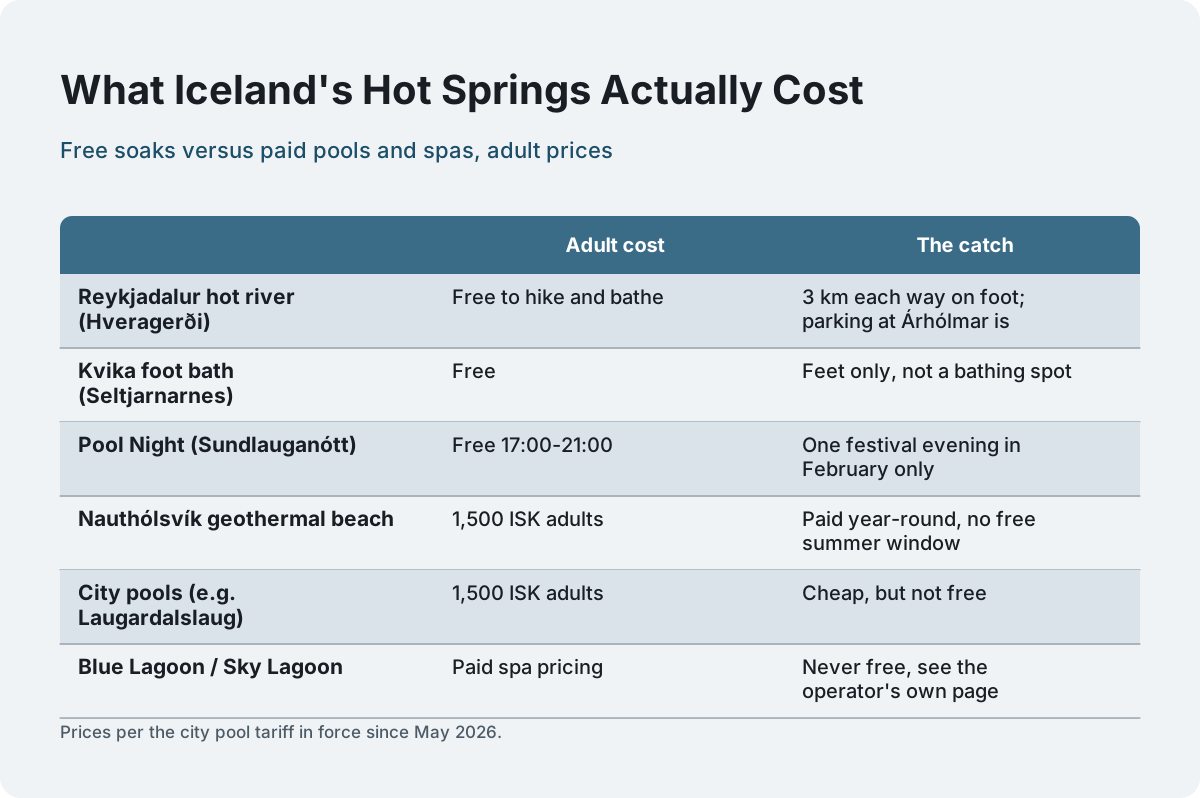
Here is the honest picture at a glance.
| Soak | Location | Cost | The catch |
|---|---|---|---|
| Reykjadalur hot river | Hveragerði, about an hour from Reykjavik | Free to hike and bathe | 3 km each way on foot; parking at Árhólmar is charged |
| Kvika foot bath | Seltjarnarnes peninsula | Free | Feet only, not a bathing spot |
| Pool Night (Sundlauganótt) | Participating Reykjavik pools | Free 17:00-21:00 | One festival evening in February only |
| Nauthólsvík geothermal beach | Reykjavik | 1,500 ISK adults | Paid year-round, no free summer window |
| City pools (e.g. Laugardalslaug) | Reykjavik | 1,500 ISK adults | Cheap, but not free |
| Blue Lagoon / Sky Lagoon | Grindavík / Reykjavik | Paid spa pricing | Never free, see the operator's own page |
A note on scope. This page is written for a visitor based in Reykjavik planning day trips, which is why the Reykjadalur river, an hour or so from the capital by car, is the headline free soak. For the wider free-activities picture across the country, the free things to do in Iceland guide covers waterfalls, hotspots and viewing spots well beyond the capital region.
Is The Reykjadalur Hot River Really Free?
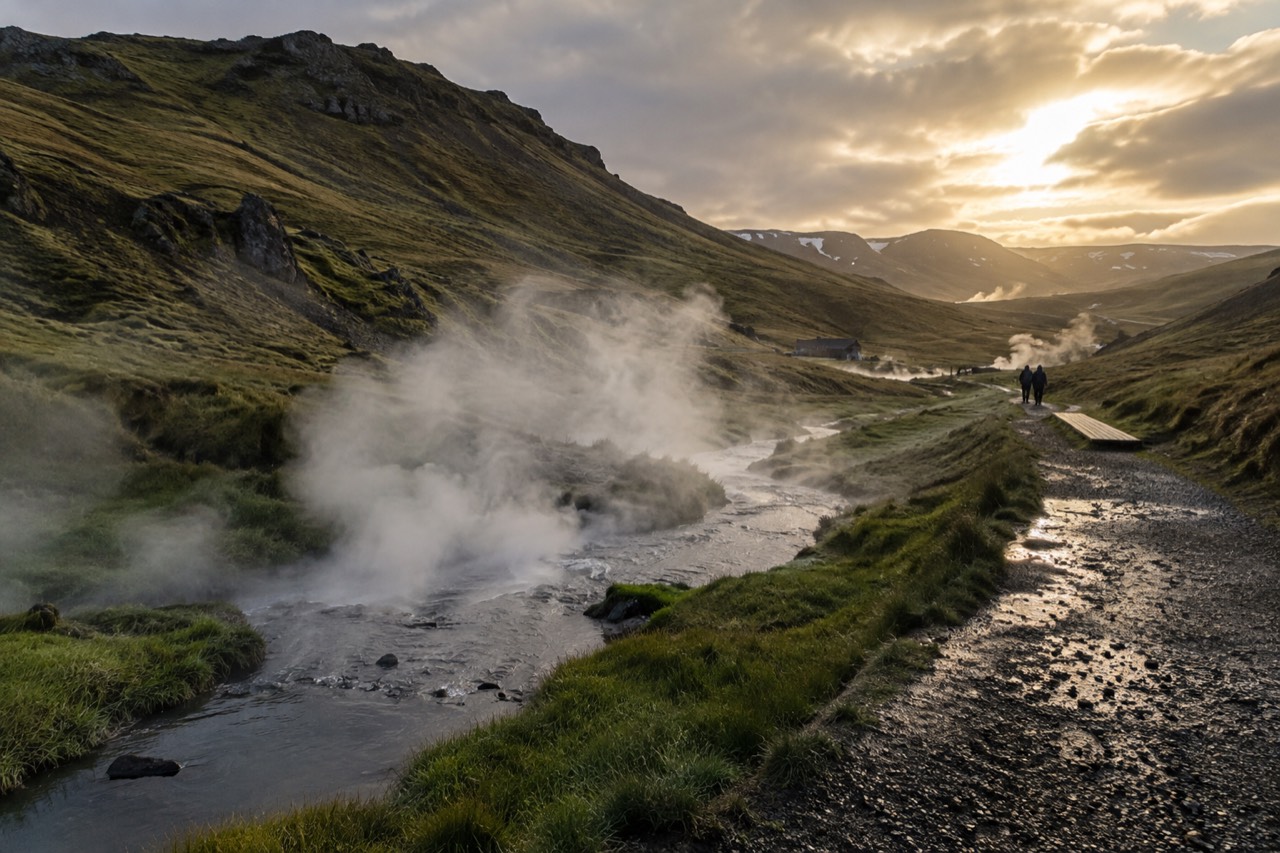
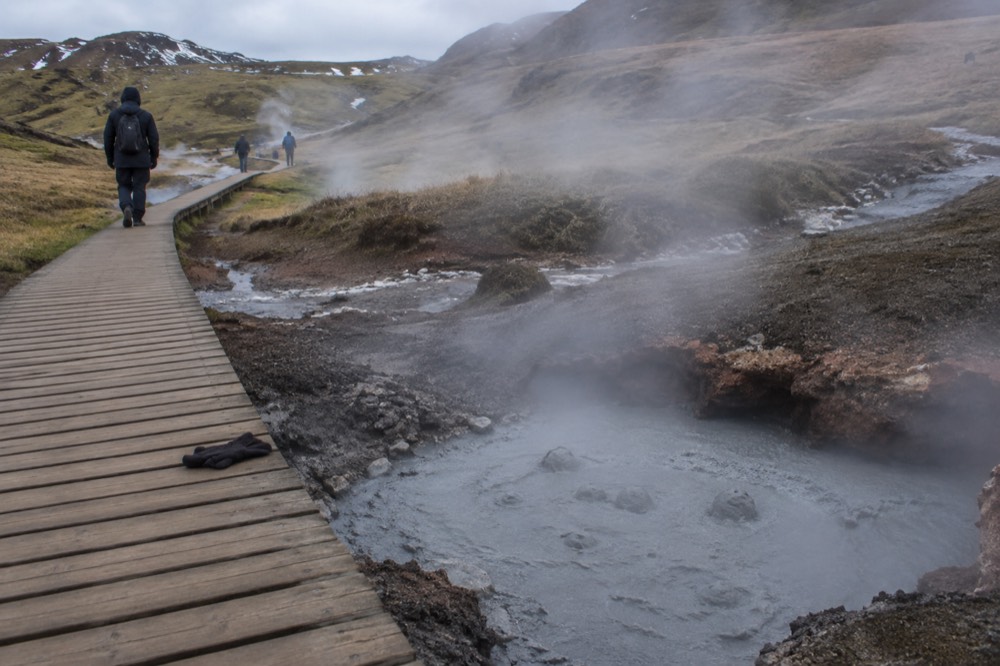
Yes, the hike and the bathing cost nothing. Reykjadalur is a geothermal valley above the town of Hveragerði, about an hour east of Reykjavik, where a warm river collects the outflow from hot springs and runs through natural pools. There is no gate, no ticket and no warden. The only charge is parking at the Árhólmar trailhead, and no official tariff for it is published, so check locally.
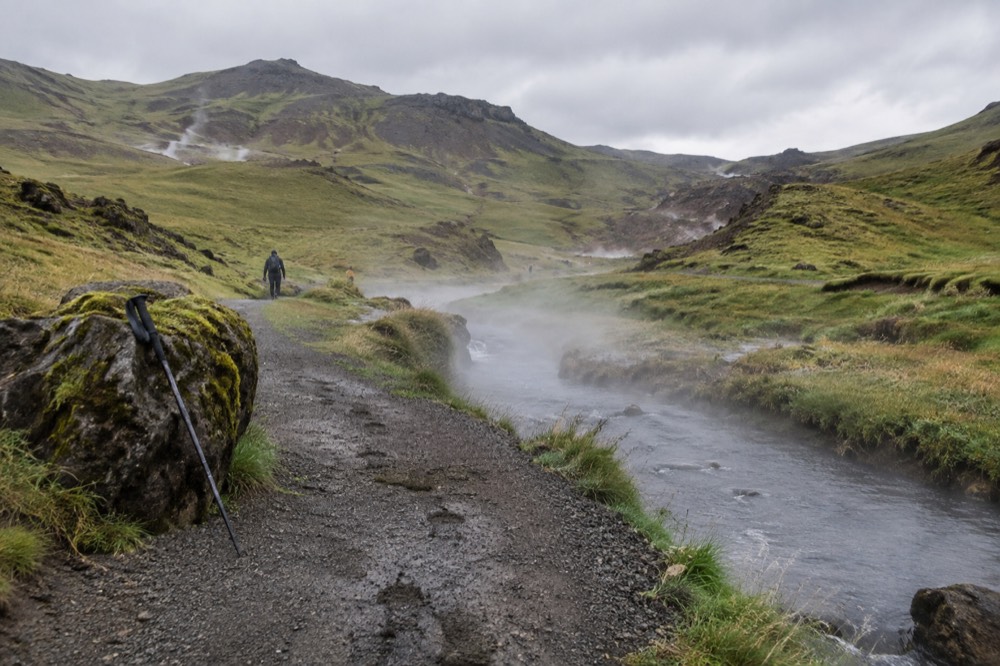
The walk is about 3 kilometres each way on a well-used trail, climbing gently from the trailhead into the valley. Expect roughly an hour each way depending on pace and conditions. The trail passes steaming vents and boiling mud pools, which are genuinely dangerous to touch, so stay on the marked path. At the top, bathers change in small riverside huts and step into the river, where the temperature varies along its length: the hotter water enters upstream, and most people find their comfortable spot by moving a few metres.
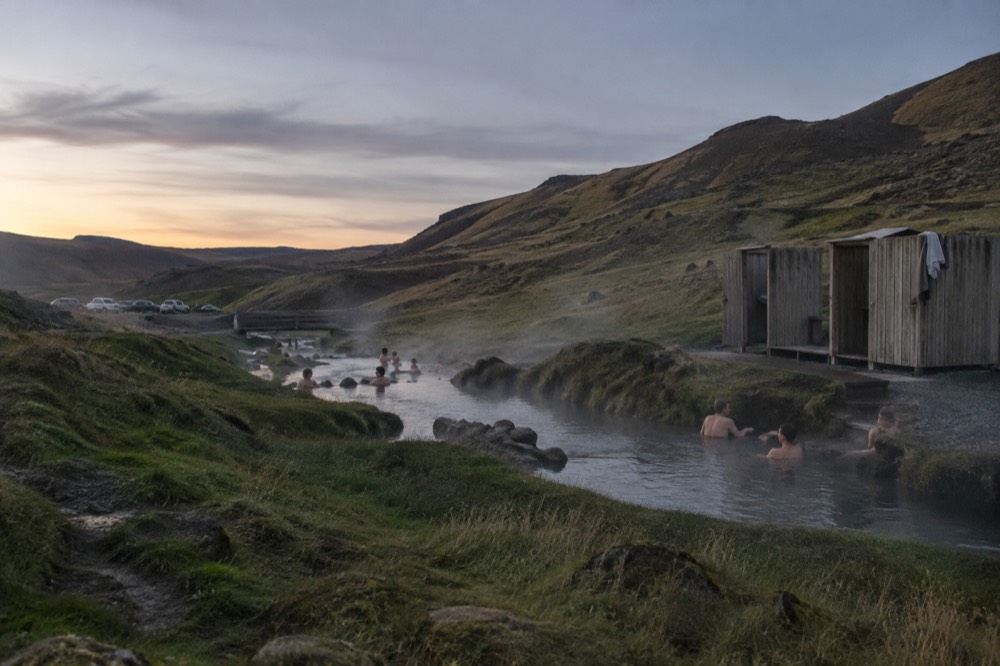
What to bring matters more here than at any other free soak in Iceland. A swimsuit and a towel are obvious, but the huts are basic and crowded at peak times, so many bathers change under a poncho or robe. Water shoes help on the stony riverbed. The valley is exposed, and Icelandic weather turns fast even in summer, so take a windproof layer for the walk even if the forecast looks kind.
| Reykjadalur planning fact | Detail |
|---|---|
| Trail distance | About 3 km each way from the Árhólmar trailhead |
| Walking time | Roughly an hour each way at a steady pace |
| Cost to bathe | Free, no ticket or booking |
| Parking | Charged at Árhólmar; no official tariff published, check locally |
| Season | Year-round on paper; winter access depends on trail conditions |
| Facilities | Basic changing huts beside the river, no showers |
If you would rather pair a soak with a proper introduction to the country's capital first, the free walking tours are a natural fit. The long-running option is CityWalk, listed on freetour.com, rated 9.6 out of 10 across 6,683 freetour.com reviews, departing daily at 10:30 and 13:30 from Austurvöllur square in front of the Parliament building. Its two-hour route covers about two kilometres and finishes at City Hall, and there is no fixed price: you pay what you feel at the end, in cash or by card.
Is Nauthólsvík Geothermal Beach Free?
No, and this is the single most repeated error in Iceland budget travel. Nauthólsvík, the geothermal beach on Reykjavik's southern edge, charges adults 1,500 ISK, with children aged 0 to 9 free and 10 to 17 at 400 ISK. The widely repeated claim that the beach is free from mid-May to mid-August is contradicted by the operator's own year-round tariff. It is a lovely spot. It is simply not a free one.
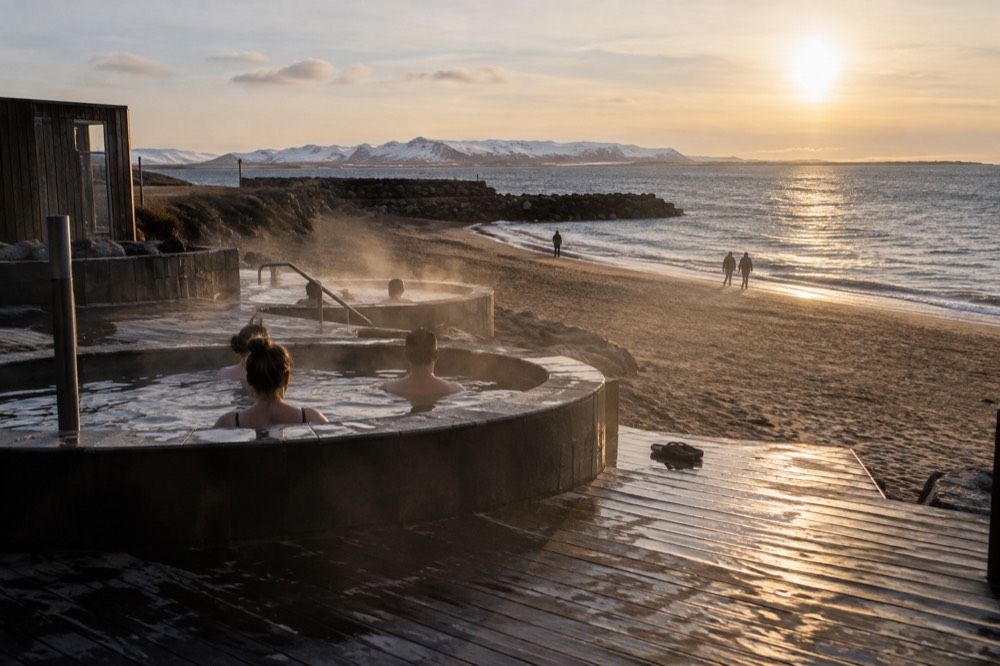
The beach itself is a modest strip of golden sand at the end of a spit, where geothermal water is mixed into the cold North Atlantic to create a swimmable lagoon, complete with hot pots and a steam bath on site. The facility is run like a city pool, with lifeguards, changing rooms and the same fee schedule, and the city's updated pool tariff that took effect in May 2026 applies here too. You can read the current prices on the beach's own site.
Why does the free-summer myth persist? Because it was true once, or at least widely reported, and old articles keep resurfacing. The official page now shows a single entrance pass with no seasonal split, and the city's fee notice from May 2026 confirms the same structure. If a blog tells you August is free, that blog is out of date.
For the full picture on this beach, including how the hot pots work and what a visit costs a family, the Nauthólsvík geothermal beach guide goes into detail.
Can You Soak For Free At Reykjavik's City Pools?
No, not on an ordinary day: Reykjavik's public pools charge adults 1,500 ISK under the tariff in force since May 2026, making them cheap rather than free. The one exception is Sundlauganótt, Pool Night, part of the Winter Lights Festival in early February, when participating pools open free of charge from 17:00 to 21:00, with the 2027 festival running 4 to 7 February.
Do not dismiss the paid pools, though. Laugardalslaug and its siblings are among the best-value experiences in the country: 1,500 ISK buys you a large heated outdoor pool, hot pots at graduated temperatures, a steam room and a cold plunge, often for as long as you like. Icelanders treat the pool as a social institution, and the unwritten shower-before-dressing rule is enforced seriously, so wash thoroughly without a swimsuit before entering.
| Pool visit | Cost (adult) | Notes |
|---|---|---|
| Ordinary pool entry | 1,500 ISK | Tariff effective May 2026, all city pools |
| Children 0-9 | Free with an adult | Family-friendly at any hour |
| Youth 10-17 | 400 ISK | Lower rate at city pools |
| Pool Night, participating pools | Free 17:00-21:00 | One evening during the Winter Lights Festival |
| Annual adult pass | 34,000 ISK | Reduced 29% in the May 2026 update |
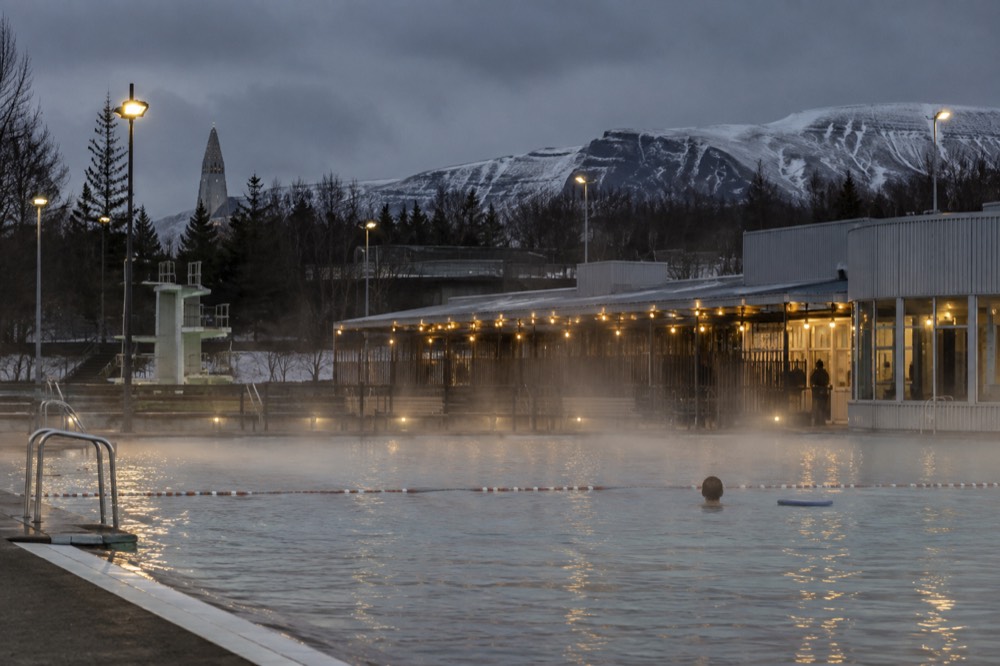
The festival context matters. The Winter Lights Festival, Vetrarhátíð, is a city-wide celebration of the returning light, with installations and events clustered around the first February weekend. Pool Night sits inside it, and the city's own festival page publishes the participating pools each year, so check the official Pool Night page close to travel.
What Is The Kvika Foot Bath And Is It Free?
Kvika is a small geothermal foot bath on the Seltjarnarnes peninsula at the western edge of the capital, and yes, there is no entrance fee. It is a shallow stone basin filled with warm geothermal seawater, sitting on a headland with open views over the Atlantic on a clear day. It is a foot bath, not a bathing spot: you roll up your trousers, sit on the edge and soak your feet.
The experience is modest and genuinely pleasant. The bath faces west, which makes it a favourite sunset stop, and in winter it doubles as a low-key northern lights waiting spot because the horizon is dark and the sea is unlit. The walk out from the nearest bus stop is short and flat, and the same peninsula takes you past the Grótta lighthouse causeway, though that area is closed to visitors from 1 May to 15 July for arctic tern nesting and the causeway floods at high tide.
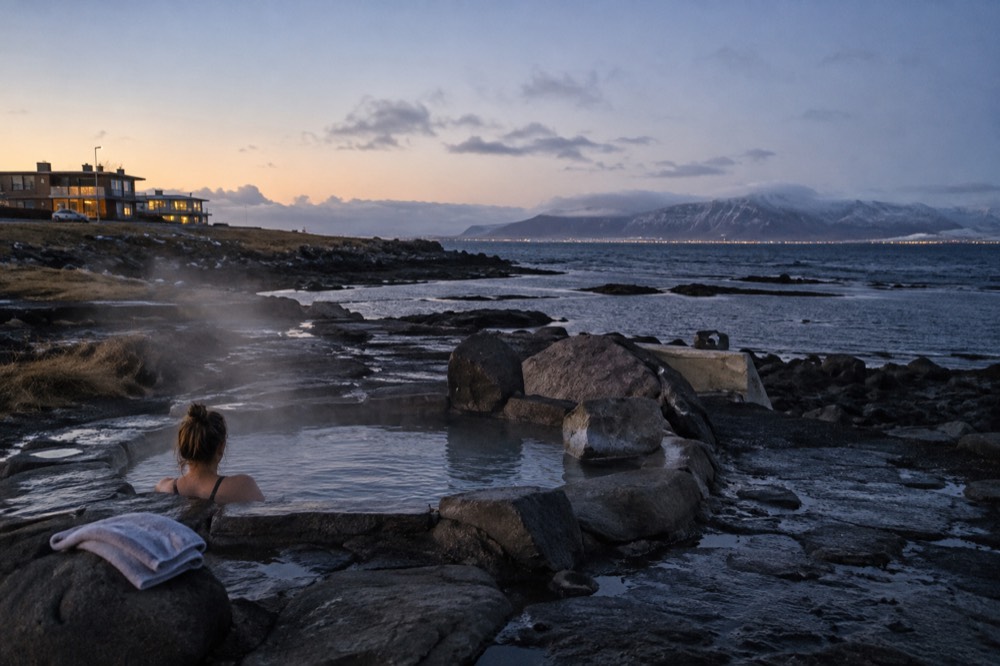
Practicalities are minimal. Bring a towel if you mind wet feet on the walk back, and check the weather, because the headland offers no shelter from the wind. Visit Reykjavík's own service page confirms there is no entrance fee, and the bath is open year-round.
What About The Blue Lagoon And Sky Lagoon?
Neither is free, and neither has ever been. The Blue Lagoon is a commercial spa near Grindavík with premium pricing and pre-booked time slots, and the Sky Lagoon is its upmarket Reykjavik competitor. Both sell an experience, not a swim: towels, silica masks and ritual walkways are part of the product. Prices live on the operators' own pages and shift with demand, so check them there rather than trusting a blog's stale figure.
The reason both come up on "free hot springs" searches is the lagoon's origin. The Blue Lagoon began as a runoff pond from the nearby geothermal power plant, and locals did once bathe in it informally. That era ended decades ago. Today it is an engineered resort with a hotel, a clinic and a queue, and the water is still plant effluent, beautifully managed.
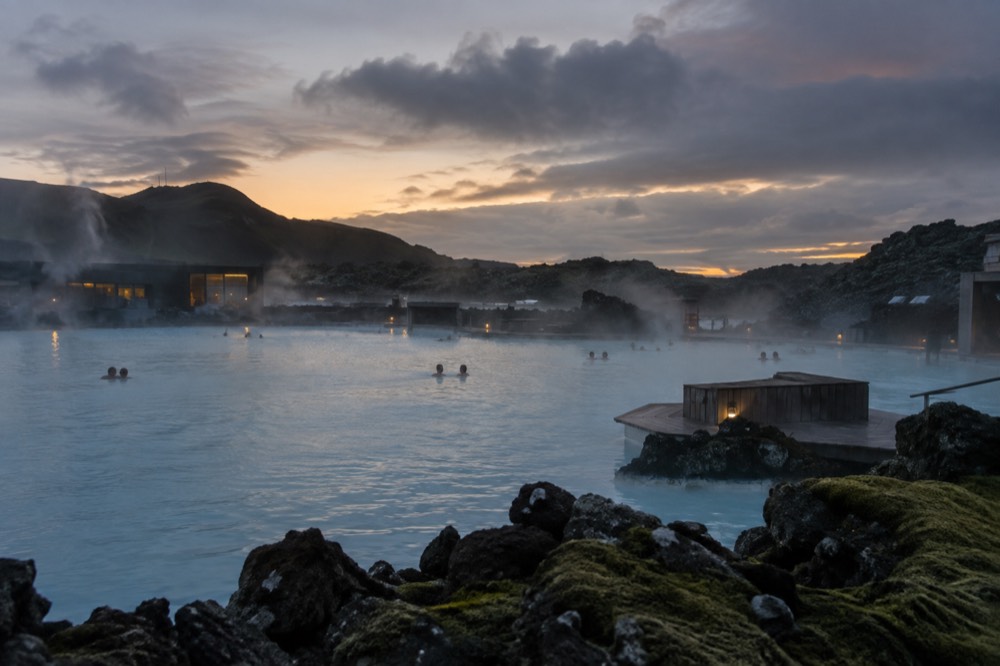
For a visitor weighing the cost, the honest comparison is not Blue Lagoon versus a free spring, it is Blue Lagoon versus the city pool at 1,500 ISK. The lagoon sells atmosphere and ritual; the pool sells hot water and Icelanders. If your question is whether the famous one is worth its price, the is the Blue Lagoon worth it piece examines exactly that trade-off.
How Do You Bathe Safely And Politely In A Free Hot Spring?
Follow three rules and you will be welcome anywhere. Never enter a spring whose temperature you have not tested, because Iceland's geothermal water can sit at boiling point a metre from a comfortable pool. Never bathe in springs that are marked protected, posted or on private land without permission. And obey the Icelandic washing convention at any facility with changing rooms: shower without a swimsuit, thoroughly, before you get in.
The safety point deserves emphasis because it is the one that hurts people. The same geological activity that warms a pleasant bathing river also produces 100-degree vents, boiling mud and unstable ground. At Reykjadalur, the hot source water enters the river upstream and the safe bathing zone is well established, but the banks carry live steam features. Everywhere else, treat any unmarked pool as too hot until proven otherwise.
| Rule | Why it exists |
|---|---|
| Stay on marked trails near steam features | Ground beside vents can be thin crust over boiling water |
| Test water before entering | Temperatures vary sharply within a single pool |
| No soap or shampoo in wild springs | Geothermal ecosystems are fragile and unprotected |
| Shower fully at manned facilities | Hygiene standard enforced by staff and by other bathers |
| Take your rubbish out | No bins on trails; carry waste back with you |
Etiquette is simpler than the reputation suggests. Icelanders are not prudish about the pre-swim shower, but they are strict about it, and the showers at every pool are monitored. In the wild, the code is quiet, small groups and leaving no trace. A free spring with a queue of loud visitors quickly becomes a closed spring.
When Is The Best Time Of Year For Free Soaks?
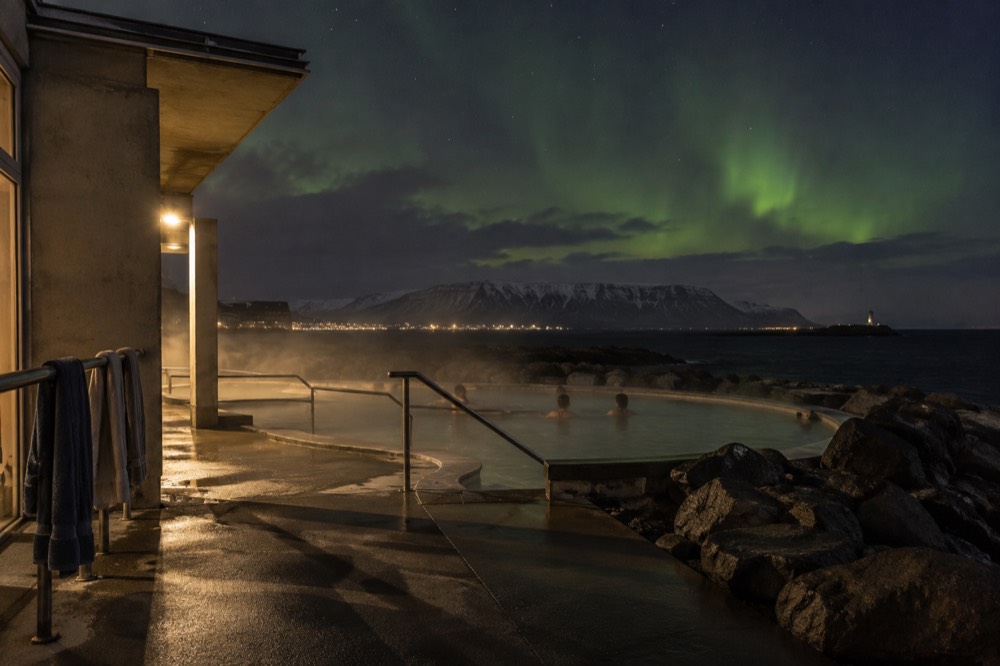
Summer gives you the Reykjadalur river at its greenest and the Kvika foot bath at midnight, while winter gives you Pool Night, steaming hot pots under dark skies and a chance of aurora from the water. The genuinely free options never close for the season, so the choice is about weather tolerance, not access. The one hard date to remember is that Grótta, near Kvika, is off-limits from 1 May to 15 July for nesting terns.
Each season reshuffles the same free spots. From September to April, dark skies turn the foot bath and the Seltjarnarnes coast into aurora viewpoints, and the city's darker parks and headlands are the standard free viewing locations. From late May through July, near-continuous daylight makes an evening Reykjadalur hike effortless, and on 21 June Reykjavik gets over 21 hours of daylight. Mid-August to mid-September adds free berry picking in the Heiðmörk reserve to a soaking itinerary.
| Season | Best free soak | Why |
|---|---|---|
| December-February | Pool Night, city pools, Kvika at dusk | Festival free entry, aurora chances from coastal spots |
| March-May | Reykjadalur before crowds | Snow retreat, fewer bathers, cooler hiking |
| June-August | Reykjadalur, Kvika at midnight sun | 21 hours of daylight in late June makes evening hikes easy |
| September-November | Kvika plus aurora watching | Dark skies return; September-April is the aurora window |
How Do You Plan A Free Hot-Springs Day Trip From Reykjavik?
Pick one anchor soak, add free stops between, and use the city's cheap buses. Reykjadalur is the full-day option: drive or bus toward Hveragerði, hike, bathe, and stop at the Kvika foot bath on the Seltjarnarnes peninsula on another day for a free wind-down. Strætó's single adult fare is 690 ISK with contactless payment and includes transfers for 75 minutes, so even the transport cost stays small.
A realistic car-free version looks like this. Take a Strætó bus toward Hveragerði in the morning, hike to the river, soak for an hour and return by late afternoon. On a separate evening, take a bus to Seltjarnarnes for the Kvika foot bath at sunset, which costs nothing but the fare. If your visit lands on the first February weekend, add Pool Night to whichever pool is participating that year.
Budgeting honestly, the whole soaking week can cost under a spa's single entry. The river is free, the foot bath is free, Pool Night is free, and the paid city pool at 1,500 ISK is the only recurring expense. Compare that with one lagoon visit and the arithmetic speaks for itself. For the broader no-cost itinerary around these soaks, Free Things To Do In Reykjavik rounds up the city's other genuinely free attractions.
One pairing worth naming: a morning free walking tour and an afternoon soak make a natural day. The smaller GuruWalk option, Sweet Streets of Reykjavík, runs Monday, Thursday, Friday, Saturday and Sunday at 11:00 in English, meets inside Harpa by the Rammagerðin store and is rated 4.6 out of 5 across 87 GuruWalk reviews. It is cash only, since the tip is the entire payment, and it needs a minimum of five bookings to run, which matters for off-season visitors.
And if your Spanish is up to it, there is a third walk: Rainbow Tours runs a Spanish-only legends walk from Arnarhóll, Monday to Friday at 17:00 and weekends at 11:00, newly listed on GuruWalk with no reviews yet. It takes bookings up to 25 people, needs a minimum of five to run, and accepts cards. For English speakers the choice is between CityWalk and Sweet Streets, and the free walking tour comparison lays out both in detail.
The walk most visitors end up taking, though, is the established one. CityWalk has run daily since 2014, covers Parliament, Laugavegur, Tjörnin, Grjótaþorp, Rainbow Street and City Hall on its two-kilometre route, and caps bookings at six people, which keeps the group small. Harpa and Hallgrímskirkja are seen from a distance rather than visited, so it pairs well with a soak the same afternoon.
Common Questions About Free Hot Springs In Iceland
Are there any genuinely free hot springs in Iceland?
Yes. The Reykjadalur hot river near Hveragerði is free to hike and bathe, the Kvika foot bath at Seltjarnarnes charges no entrance fee, and Pool Night opens participating city pools free of charge on one February evening. Everything with staff, changing rooms and lifeguards charges admission.
Is Nauthólsvík geothermal beach free?
No. Adults pay 1,500 ISK, children aged 0 to 9 are free and 10 to 17 pay 400 ISK. The often-repeated claim that the beach is free in summer is contradicted by the operator's own year-round tariff.
Is the Blue Lagoon ever free?
No. It is a commercial spa near Grindavík with demand-based pricing published on its own site. Locals bathed informally in the runoff pond decades ago, but that practice ended long before the current resort existed.
How much does the Reykjadalur hot river cost?
Nothing to hike or bathe. The only charge is parking at the Árhólmar trailhead, for which no official tariff is published, so check locally before you go.
Are Reykjavik's public pools free?
Not on ordinary days. Adults pay 1,500 ISK under the tariff in force since May 2026, with children 0 to 9 free. The one free exception is Pool Night during the Winter Lights Festival, 17:00 to 21:00 at participating pools.
When can you see northern lights while soaking for free?
From September to April, the Kvika foot bath and the Seltjarnarnes coast sit under dark western skies, making them practical free aurora waiting spots. The geothermal river at Reykjadalur closes with darkness on the trail, so plan that one for daylight.