Free Things To Do In Iceland: The Honest Country Guide
Iceland gives away more than its reputation suggests: the walks, the hot rivers, the aurora viewpoints and the festivals that cost nothing, plus the traps that only look free.
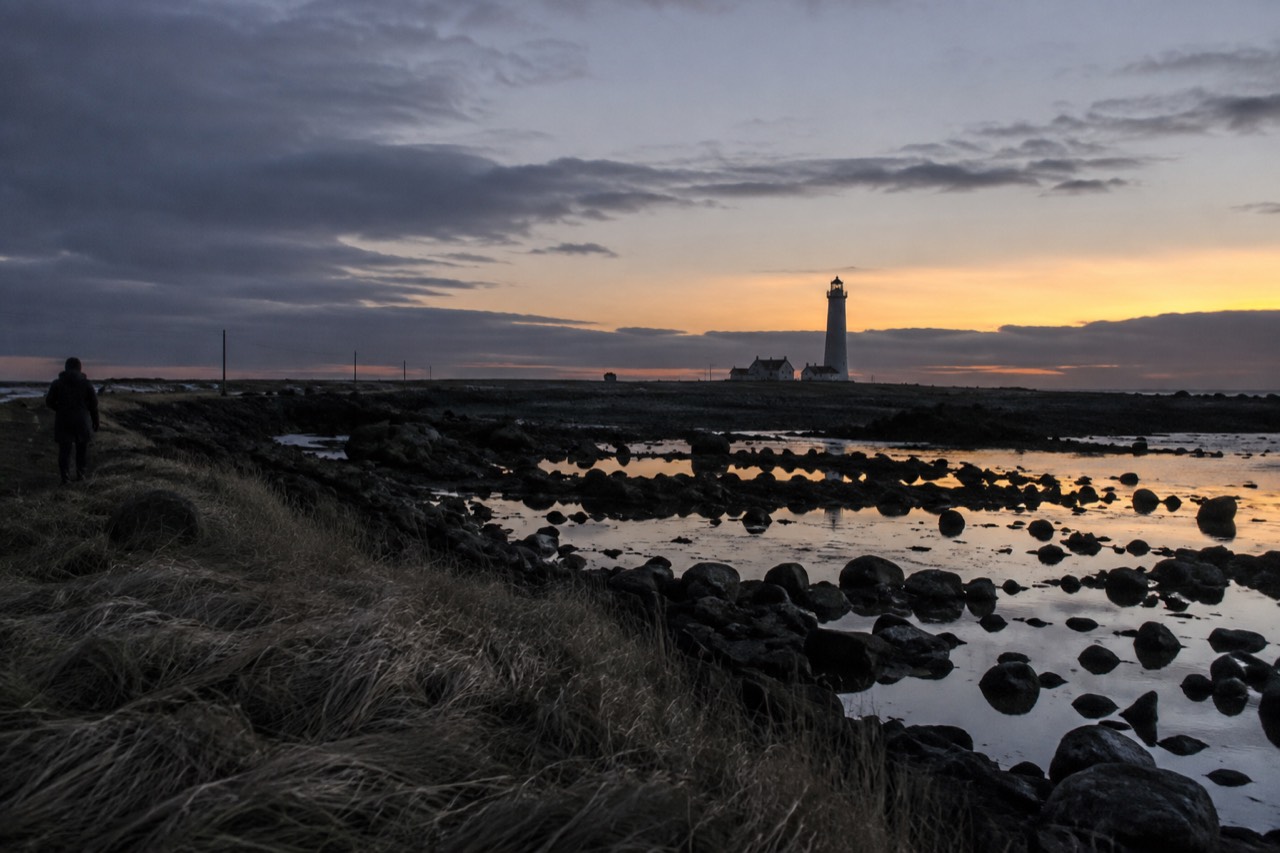
Short answer
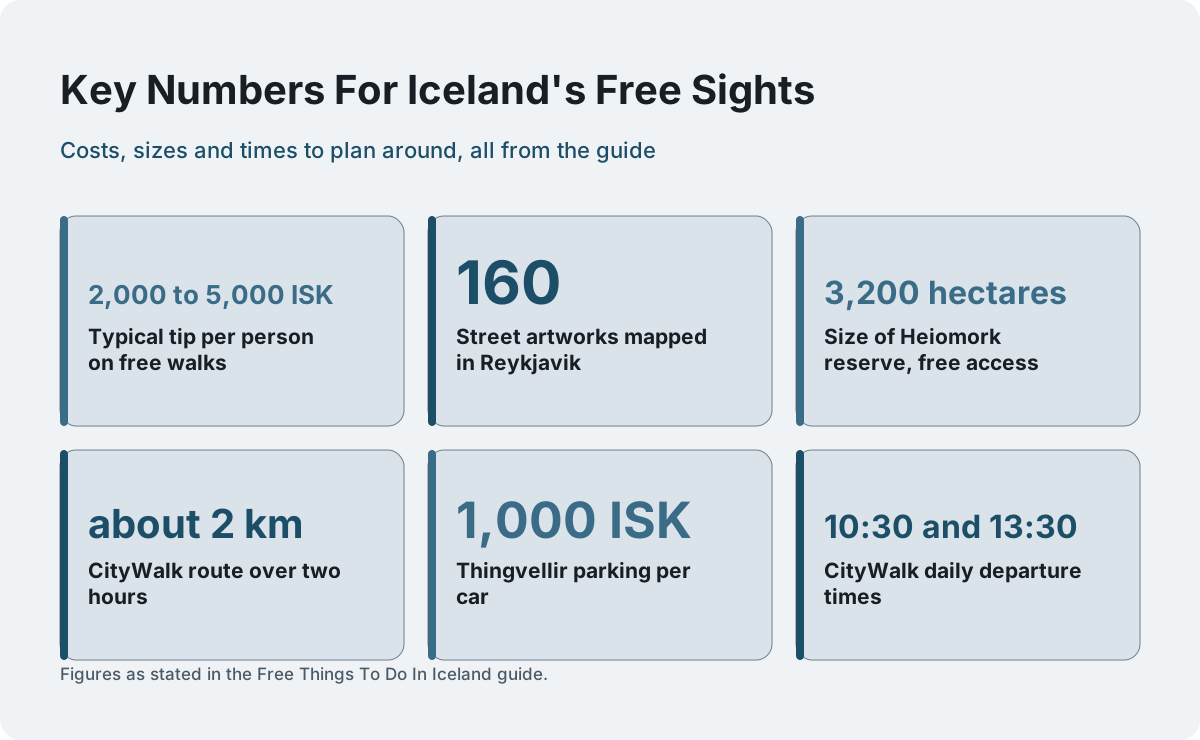
The best free things to do in Iceland are the tip-based walking tours of Reykjavik, hikes up Mount Esja and through Heiomork nature reserve, northern lights viewing from public spots between September and April, the free Reykjadalur hot river hike, street art, and free festivals like Culture Night on 21 August 2027.
Most visitors land in Keflavik, spend a fortune in three days, and leave convinced Iceland is a country where everything costs money. The country's own tourism material tells a different story. The capital's free walking tour has run every day since 2014 on tips alone, the city maps more than 160 street artworks you can walk past for nothing, and a two-hour hike from a Reykjavik suburb ends at a hot river you can bathe in without paying a krona. This guide covers what is genuinely free across Iceland, what is conditionally free, and what only looks free.
What Is Genuinely Free In Iceland?
Iceland's genuinely free category covers the tip-based walking tours of Reykjavik, all public hiking trails including Mount Esja and Heiomork, northern lights viewing from public parks and coastlines between September and April, the Reykjadalur hot river, street art, public sculptures like the Sun Voyager, Tjornin pond, the national day and Culture Night festivals, and tap water everywhere. None of these carry a ticket, a card, or a hidden condition. The pattern worth noticing is that Iceland prices its buildings and its baths, not its landscape. Museums, towers, pools and geothermal beaches all charge. Mountains, coastlines, parks, aurora and festivals do not.
The city of Reykjavik itself publishes a free things list that includes the Old Harbour waterfront, the Tjornin pond and its surrounding parks, and the sculpture garden behind Hallgrimskirkja, all confirmed free on the official Visit Reykjavik page. Beyond the capital, the same logic holds at national scale. Thingvellir National Park charges nothing to walk the rift valley where the Althingi, the world's oldest surviving parliament, first met. Only the parking costs money, and even that is a flat day rate rather than an entry fee. This stop sits on a free walking route, Spanish-Language Legends Walk.
| Free thing | Where | Catch |
|---|---|---|
| Free walking tours | Reykjavik | Tip expected, cash for one walk |
| Mount Esja trails | 20 min from Reykjavik | Parking status unconfirmed |
| Heiomork reserve | Reykjavik outskirts | None |
| Reykjadalur hot river | Hveragerdi, under an hour's drive | Paid parking, no tariff published |
| Northern lights viewing | Public parks and coasts | Season runs September to April |
| Street art | Reykjavik centre | None |
| Thingvellir rift valley | Under an hour from Reykjavik | Parking 1,000 ISK per car |
| Culture Night | Reykjavik, 21 Aug 2027 | One day a year |
For a city-level breakdown with every verified free sight, see the companion page on free things to do in Reykjavik. This country guide sticks to what a visitor can verify before setting out.
Are Free Walking Tours In Iceland Actually Free?
Yes. Iceland's free walking tours charge nothing up front and run entirely on tips, and there are exactly two real options for English speakers, both in Reykjavik: CityWalk, rated 9.6 out of 10 across 6,683 freetour.com reviews, and the Sweet Streets walk on GuruWalk, rated 4.6 out of 5 across 87 GuruWalk reviews. A third walk exists in Spanish only. There is no wider roster to browse, and no free tour operator outside the capital.
CityWalk is the long-running, dominant free walk in the country. It was founded in 2014 by Marteinn Briem, a history graduate, and it departs every day from Austurvollur square in front of the Parliament building at 10:30 and 13:30. The route covers about 2 km over two hours, passing Laugavegur, the Tjornin pond, the old turf cottages of Grjotathorp and Rainbow Street, and finishing at City Hall. Bookings open roughly five days in advance and each booking takes up to six people. The price is whatever you choose to pay the guide at the end, in cash or by card. The tour's own page notes that Harpa and Hallgrimskirkja are seen from a distance rather than entered, which is worth knowing before you plan your day around it. This stop sits on a free walking route, Morning Walk From Harpa, Cash Tips.
The reason a country-level guide starts here is simple: for a visitor who has just landed and knows nothing, two hours with a local historian is the cheapest orientation money does not have to buy. Guides on these walks rely on tips as their primary income, and the commonly cited range is 2,000 to 5,000 ISK per person. That is a real cost, but it is a cost you control, and it is the only walk format in Iceland that works that way.
Which Free Walk Should You Take?
Take CityWalk if you want the established, twice-daily English walk with a decade of reviews behind it. Take Sweet Streets if the 11:00 morning slot or a bilingual English and Spanish guide suits you better, but note it is cash only, caps groups at 10, and needs a minimum of 5 bookings to run. The two walks are not competing products so much as two time slots with different characters.
Sweet Streets is the smaller GuruWalk option. It runs Monday, Thursday, Friday, Saturday and Sunday at 11:00 in English, meeting at the Harpa concert hall. It is not a daily walk, so check the calendar before building a day around it. Two practical caveats matter more than the rating gap: the walk is cash only, which on a pay-what-you-want tour means a visitor with no cash cannot pay the guide at all, and it needs five people booked to go ahead, which can bite in the off-season. Cancellation is free, and the guide asks that you cancel rather than no-show.
There is also a Spanish-language legends walk, run by Rainbow Tours, meeting at Arnarholl. It departs Monday to Friday at 17:00 and on weekends at 11:00. Its GuruWalk listing was created on 27 August 2026 and carries no reviews yet, and the same walk appears on freetour.com under a different listing number, so do not mistake the two pages for two separate tours. For an English speaker it is not an option, and this guide does not treat it as one. The walk takes bookings up to 25 people and also needs a minimum of 5 to run, and it accepts cards, unlike the Sweet Streets walk.
Is Hiking In Iceland Free?
Yes. Every public hiking trail in Iceland is free to walk, including the Mount Esja trail network above Reykjavik, the Heiomork nature reserve, the Ellidaardalur valley inside the city, and the Öskjuhlid woods. There are no trail fees, no permits for day hikes, and no season passes. The only costs are getting to the trailhead and, in some cases, parking, and no official source confirms a parking charge at Esja's trailheads.
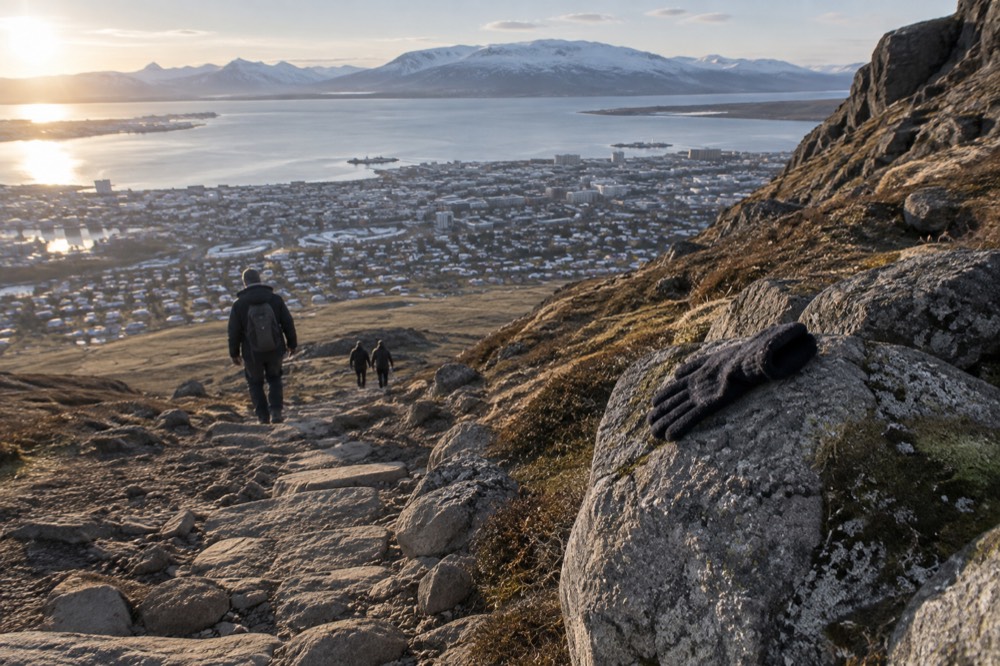
Mount Esja is the mountain you see across the bay from downtown Reykjavik, and its trail system is the country's most accessible real hike. The Steinn trail to the rocky plateau is the popular ascent, steep in the final stretch and often windy at the top. It is a genuine mountain, not a city stroll: weather changes fast, and the upper section holds snow well into summer some years. The view back over Reykjavik and across to the Snafellsnes peninsula on a clear day is the reward, and it costs nothing but effort.
What Is Heiomork, And Why Is It Free?
Heiomork is a 3,200-hectare nature reserve on Reykjavik's eastern edge, run by the municipality as open public land, with free access year-round, marked hiking and biking trails, lava fields, planted forests, and wild berry picking from mid-August to mid-September. Its own policy line is that everyone is welcome, and no part of the reserve charges admission.
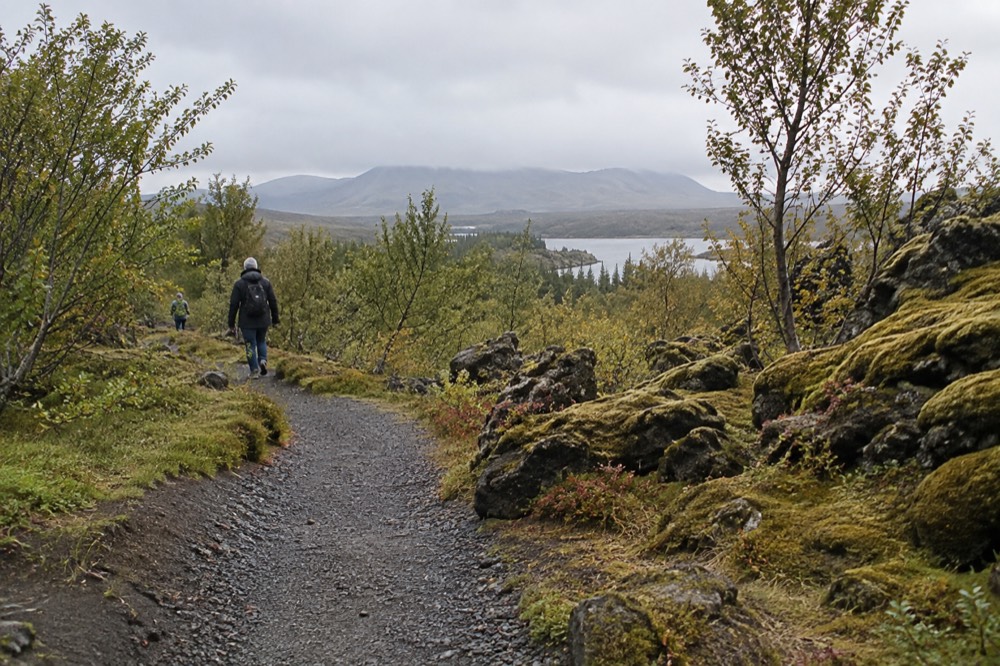
The reserve sits about 20 minutes' drive from the centre, reachable by car or by a combination of bus and a walk. It is where Reykjavik residents go to walk their dogs on a Sunday, which is exactly the recommendation: this is local land, used locally, free by design rather than as a promotion. Rauðaholar, the red pseudocraters inside the reserve's edge, are among the strangest free sights in the capital area. The reserve also appears on every local northern lights list, because it is dark enough to matter while still being inside the city's bus network.
Where Can You See The Northern Lights For Free?
The northern lights are free to watch from any dark public spot in Iceland, and the season runs September to April. Around Reykjavik the named free viewpoints are Grótta at Seltjarnarnes, Öskjuhlid, Klambratun, Ellidaardalur, Rauðaholar and Lake Ellidavatn. No tour, no ticket and no guide is needed, only a clear sky, darkness, and the patience to check an aurora forecast before heading out.
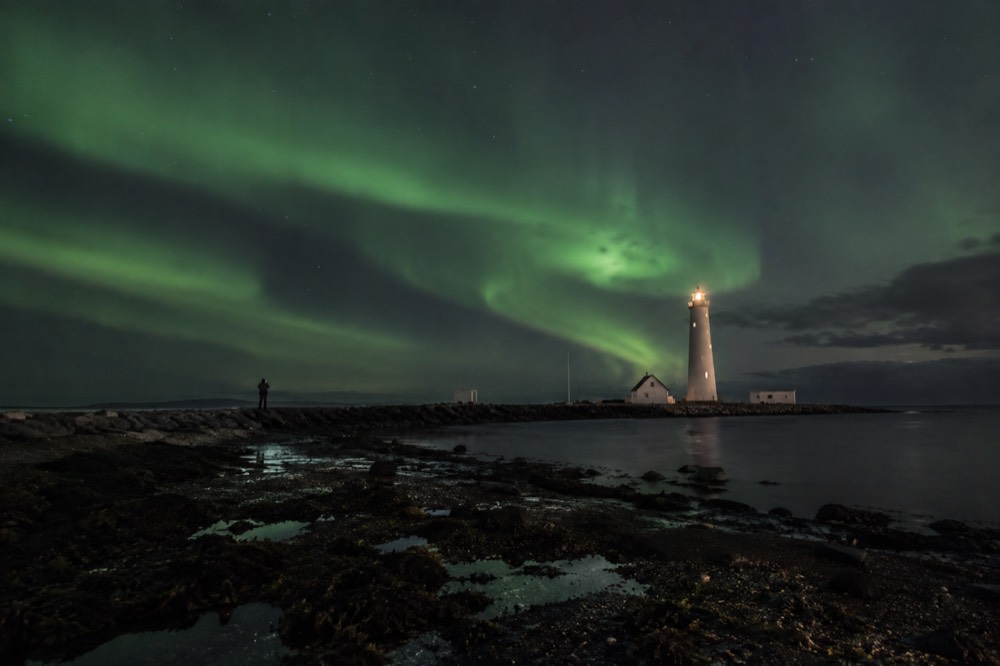
The honest framing is that paid aurora bus tours sell comfort and a driver, not the lights themselves. The lights appear over the whole country on the same nights, and a city-dweller with warm boots and a 20-minute bus ride stands a fair chance from the public spots the tourist office itself names. Two caveats travel with the Grótta lighthouse spot in particular: the causeway to the islet floods at high tide, and the whole area is closed to visitors from 1 May to 15 July for arctic tern nesting. Outside that window it is free, and it is the darkest horizon within walking distance of the capital. The reserve around Grótta was expanded in July 2026, which reinforces rather than changes the protections. The full spot-by-spot breakdown lives in the guide to northern lights viewing in Reykjavik.
Is The Reykjavik Street Art Free To See?
Yes. Reykjavik maps more than 160 street artworks across the city, all in public space, all free to see at any hour, with the densest clusters around Laugavegur and the side streets of the downtown grid. The city's own statement on the mapping project is blunt: you do not have to pay to enjoy street art.
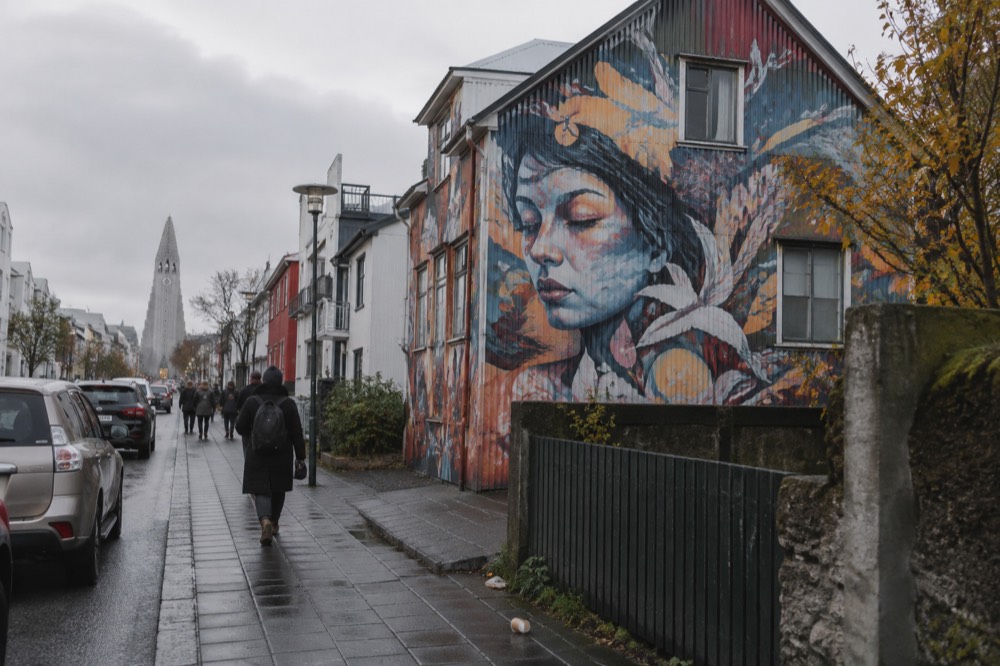
The murals exist partly because of the harsh climate and partly because of the annual Winter Lights Festival, which commissions new work each February. Unlike a museum, the collection is outdoors, open overnight, and rearranged slowly as buildings are painted and repainted. A self-guided wander down Laugavegur, up Skolavordustigur and through the Grandi district will pass a few dozen pieces without any planning. The dedicated page on Reykjavik street art covers where the clusters are and what the mapping project records.
What Are The Free Sculptures And Waterfront Sights In Reykjavik?
The Sun Voyager steel sculpture on the Saebraut seafront, the Einar Jonsson sculpture garden behind Hallgrimskirkja, the Old Harbour and Grandi quays, and the Thufa art mound are all free, unfenced and open at any hour. Together they form a walkable waterfront line from the city centre westward, and none of them has a ticket, a gate or an opening time.
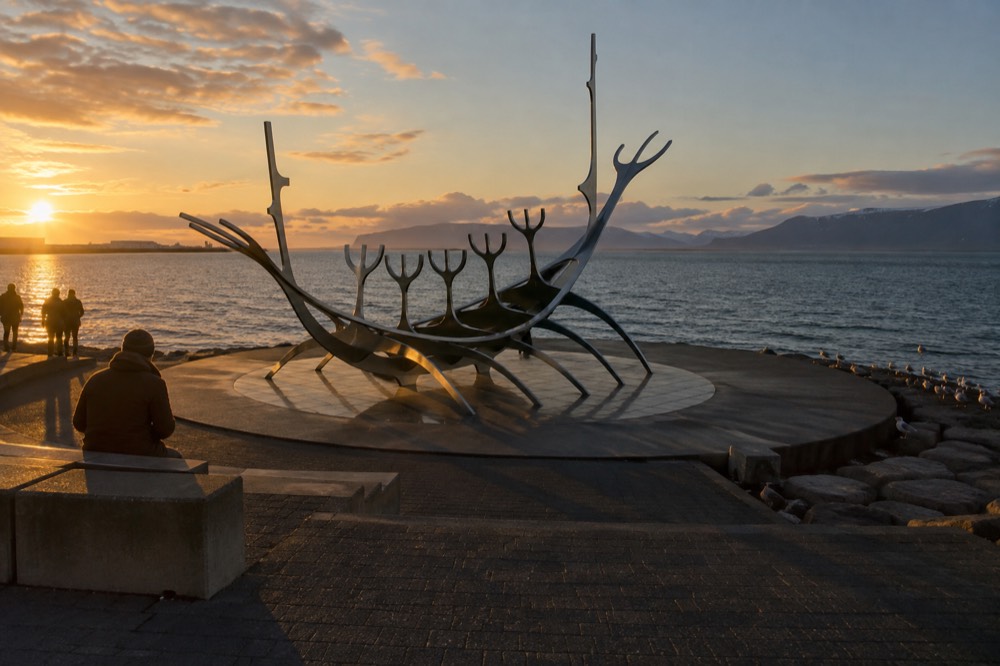
The Sun Voyager is the one most visitors already know from photographs, a dream-boat steel frame facing the bay with Esja behind it. The Einar Jonsson garden a few streets inland is the overlooked one: Iceland's foremost sculptor donated the collection, the outdoor garden is free year-round, and only the museum building beside it charges. The Old Harbour walk continues past the fishing boats to Thufa, an artificial mound planted with angelica that gives a 360-degree view of the harbour, and it ends near the Harpa concert hall, whose foyer and ground-floor sound installation are also free to enter during opening hours. The Sun Voyager has its own page in the guide to the Sun Voyager sculpture for readers who want the history.
Can You Bathe In Hot Springs For Free In Iceland?
Yes, but only in the wild ones. The Reykjadalur hot river near Hveragerdi is free to hike and free to bathe in, and the Kvika foot bath at Seltjarnarnes is free year-round. Every developed site charges: public pools cost 1,500 ISK for an adult, the Nautholsvik geothermal beach charges the same year-round, and the Blue Lagoon is a full-priced spa. The dividing line is infrastructure, not water.
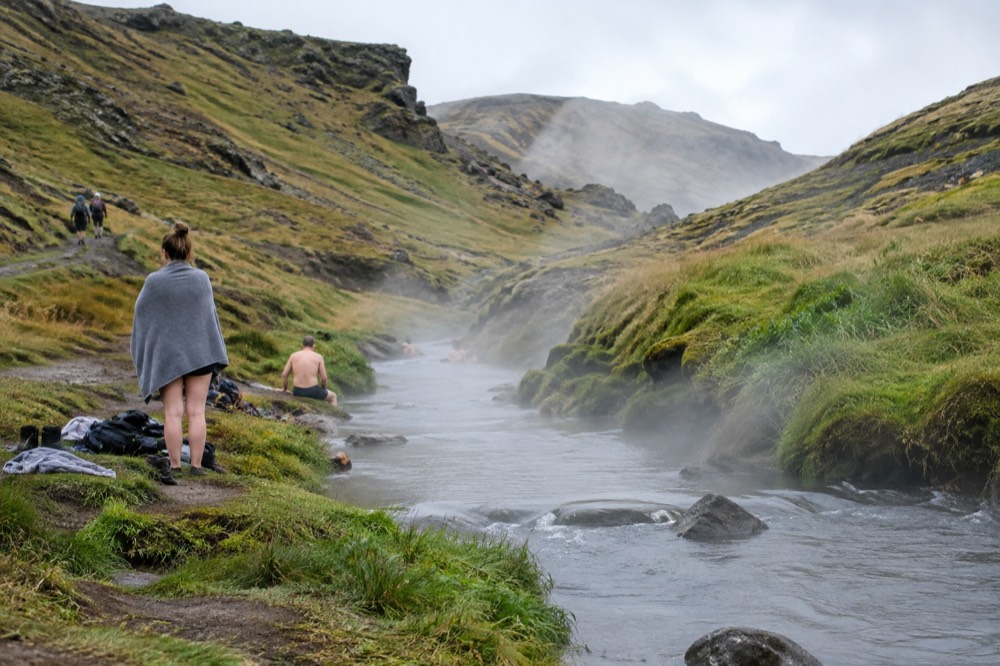
Reykjadalur is the classic: a hike up a valley from Hveragerdi, ending at a river that runs hot from geothermal springs, where people change in small wooden huts and bathe in the stream. The hike and the bathing cost nothing. Parking at the trailhead is charged, and no official tariff has been published, so budget a few hundred krona and check locally. The Kvika foot bath is the low-effort version: a small stone pool by the sea at Seltjarnarnes, free, with no entrance fee, warm enough to soak your feet while you watch for aurora. The wider picture, including which sites are conditionally free, is in the guide to free hot springs in Iceland.
What Free Festivals Happen In Iceland?
Iceland's major public festivals are free to attend: Culture Night in Reykjavik on Saturday 21 August 2027, the National Day celebrations on 17 June with a parade and concerts in the city parks, Museum Night in early February when participating museums open free, the Winter Lights Festival on 4 to 7 February 2027, and ten community New Year's Eve bonfires across Reykjavik. None of these charges admission.
Culture Night, Menningarnott, is the biggest single free day in the country. Museums and galleries open free or late, streets fill with performances, and the night ends with fireworks near Arnarholl at around 10 p.m., after which the Strætó buses run free between 22:00 and 23:00. National Day on 17 June follows a similar shape: an official ceremony at Austurvollur at 11:00, a parade from Hallgrimskirkja at 13:00, and family events in Hljomskalagardur park through the afternoon. The New Year bonfires are lit around 8:30 p.m., weather permitting, and personal fireworks are banned at the sites themselves.
| Festival | Date | What is free |
|---|---|---|
| Culture Night | Sat 21 Aug 2027 | Events, museums, fireworks, late buses |
| National Day | 17 June annually | Ceremony, parade, park concerts |
| Winter Lights Festival | 4-7 Feb 2027 | Light trail and installations |
| Museum Night | Early Feb 2027 | Entry at participating museums |
| New Year bonfires | New Year's Eve | Ten public bonfires citywide |
What Only Looks Free In Iceland?
The Nautholsvik geothermal beach charges 1,500 ISK for adults year-round despite a widely repeated claim of a free summer window, the Perlan observation deck cannot be bought separately from a full ticket, the Hallgrimskirkja tower lift costs 1,500 ISK, and anything described as free with the Reykjavik City Card is not free because the card itself costs 6,100 ISK for 24 hours. These four account for most of the disappointment visitors report.
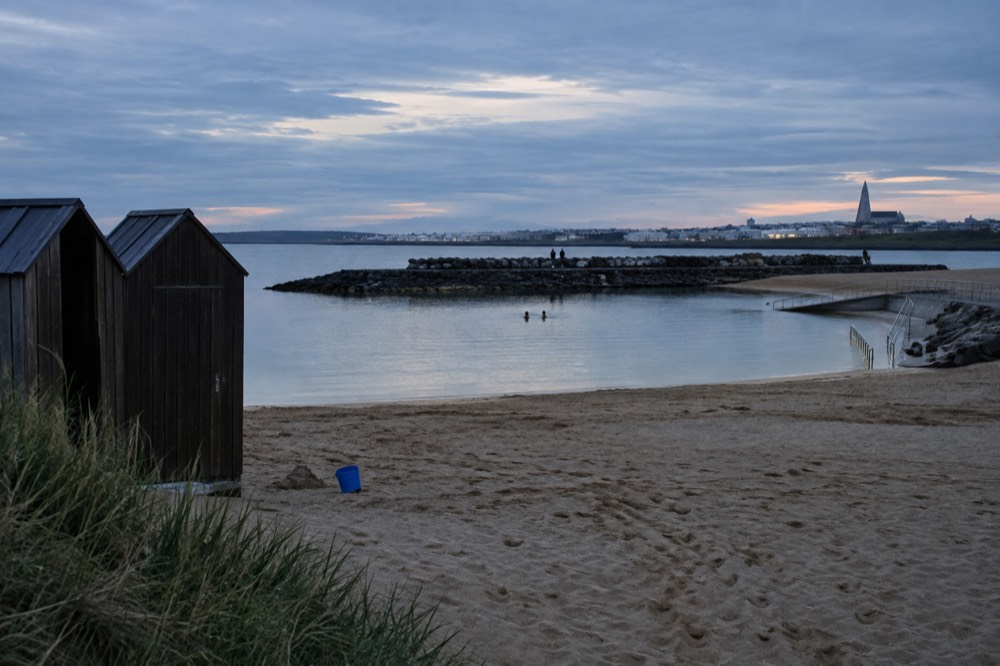
Nautholsvik is the single biggest trap, and the official tariff on the beach's own site is one flat year-round pass with no seasonal split. The often-repeated free period from mid-May to mid-August is contradicted by that page. Perlan's observation deck is included in every ticket and cannot be purchased on its own; the free alternative is the Öskjuhlid hill it stands on, whose woodland trails and viewpoint cost nothing. The Hallgrimskirkja tower is paid while the church nave is not, and the City Card bundles paid museums behind a paid pass, which is a discount product, not a free one. The pool tariff detail sits on the city's official price schedule.
How Do You Get Around Iceland Cheaply?
Strætó capital-area buses cost 690 ISK per adult single with contactless payment or the app, valid 75 minutes including transfers, and children 11 and under ride free, which makes the bus the cheapest legal way to reach Esja, Heiomork and the free coastal spots from downtown Reykjavik. The Flybus from Keflavik Airport costs 3,999 ISK one-way to the BSI terminal, and Strætó route 55 does the airport run for roughly 2,400 ISK.
The fare detail matters for a free-things itinerary because the only real cost of most free sights is the journey. A day bus pass no longer exists, since day passes were discontinued, but fare capping limits an adult to three charged rides per day on the same card, so a heavy bus day effectively tops out. Tap water is free and safe everywhere in Iceland, sourced from protected groundwater, which quietly removes the biggest daily cost most visitors budget for. Full transport detail, including the fare changes, is on the Strætó pricing page.
| Journey | Cost | Notes |
|---|---|---|
| Strætó single, adult | 690 ISK | 75 min validity, transfers included |
| Strætó single, child 11 or under | Free | |
| Strætó single, youth 12-17 / senior 67+ | 345 ISK | |
| Flybus, Keflavik to BSI | 3,999 ISK | Wi-Fi and luggage included |
| Strætó route 55, airport | ~2,400 ISK | Slower, much cheaper |
| Thingvellir parking, car up to 5 seats | 1,000 ISK | Valid all day, all car parks |
For anyone stretching a budget further, the pages on Iceland on a budget and free camping in Iceland cover the accommodation and food side, and the site's homepage, Free Things To Do In Reykjavik, collects every verified free sight in the capital. The short version of the whole country guide is this: walk, look up, soak in the wild water, and time your visit to a festival. The buildings can wait, or they can be paid for knowingly.
Common Questions About Free Things To Do In Iceland
What is totally free in Iceland?
Public hiking trails, wild hot springs like the Reykjadalur hot river, northern lights viewing from public spots, street art, public sculptures, the national parks' trails, tap water, and the major public festivals including Culture Night and National Day. Free walking tours in Reykjavik are free up front and tip-based at the end.
Can you do Iceland without spending money on activities?
Almost entirely, if you base yourself in Reykjavik and use the buses. The walks, hikes, aurora spots, waterfront sights and festivals cost nothing. The unavoidable costs are transport, food and accommodation, since even the cheapest public pool charges 1,500 ISK for an adult.
Is the Blue Lagoon free?
No. The Blue Lagoon is a paid spa with a full ticket price. The free geothermal bathing alternative is the Reykjadalur hot river near Hveragerdi, which costs nothing to hike or bathe in, though parking at the trailhead is charged.
Are the free walking tours in Iceland really free?
Yes, in the sense that there is no upfront price. The guides work for tips as their primary income, and the commonly cited range is 2,000 to 5,000 ISK per person. CityWalk accepts cash or card at the end; the Sweet Streets walk on GuruWalk is cash only.
When can you see the northern lights in Iceland for free?
From September to April, on clear, dark nights, from any of the public viewpoints around Reykjavik such as Grotta, Oskjuhlid and Ellidaardalur. No tour is required. The Grótta area is closed to visitors from 1 May to 15 July for nesting birds.
Is Thingvellir National Park free?
Entry is free, but parking is not. A car of up to five seats pays 1,000 ISK for the day, valid across the park's car parks. Arriving by bus or on a tour avoids the parking fee entirely.