Laugavegur Reykjavik: A Free Walk Down The City's Main Street
Laugavegur is the spine of Reykjavik, a 1.4 kilometre street that stacks most of the city's free sights within a single walk, and a tip-based guide can walk it with you for whatever you choose to pay.
Short answer
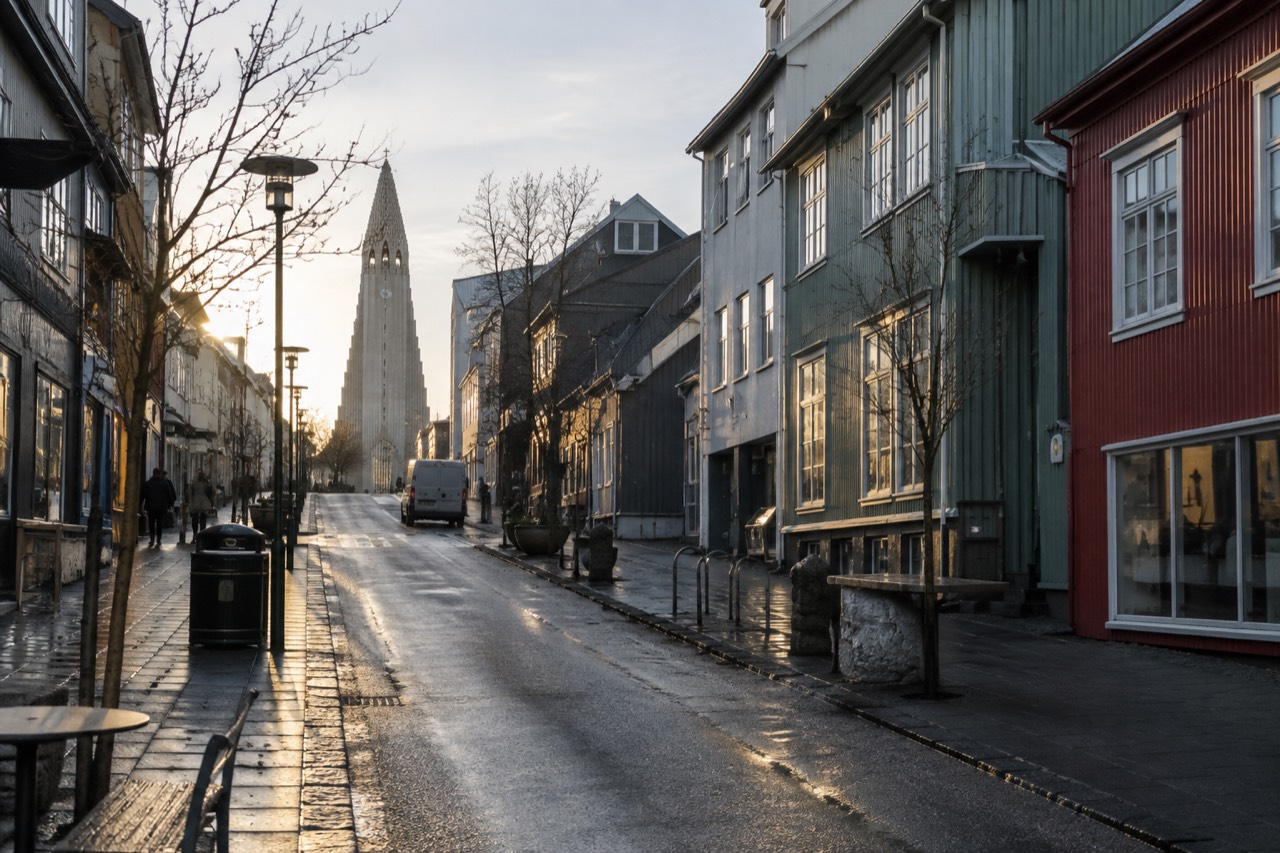
Laugavegur is Reykjavik's main street, roughly 1.4 km from the Old Harbour end up to Hallgrímskirkja, free to walk at any hour. A tip-based CityWalk tour covers it daily at 10:30 and 13:30 from Austurvöllur, and Rainbow Street, the street art and Harpa's foyer all cost nothing along the way.
Laugavegur means "wash road", named for the route that once carried laundry down to the ponds and streams below the town. Today it is the street every visitor ends up on, running uphill from the city centre toward the tower of Hallgrímskirkja, and nearly everything worth seeing along it costs nothing to look at. The shops and cafés are not free, but the street itself, the painted steps off its side, the murals on its walls and the two landmark buildings at either end are.
This page walks Laugavegur from bottom to top and back down the other side, naming what is genuinely free, what carries a small charge and what the big traps are. It also covers the two free walking tours that cover this street with a local guide, both of which work on tips rather than tickets.
What Is Laugavegur And Where Does The Walk Start?
Laugavegur is Reykjavik's principal shopping and strolling street, about 1.4 km long, running from the Bankastræti end near the city core up to the intersection below Hallgrímskirkja, and it is a public street open at any hour with no fee, gate or ticket anywhere along it. It was one of the city's oldest roads, serving the hot-spring washing pools that gave it its name, and it became the main commercial street as Reykjavik grew into a capital. The lower half is dense with shops, the upper half slopes upward and opens out toward the church.
The useful mental model is a ridge. Laugavegur climbs steadily from the west end, and two parallel streets, Hverfisgata one block north and Skólavörðustígur climbing away to the south, let you loop rather than backtrack. Most first visits end up walking Laugavegur up, turning onto Skólavörðustígur for the Rainbow Street photo and Hallgrímskirkja, then descending through the streets of the old quarter toward the pond and the harbour.
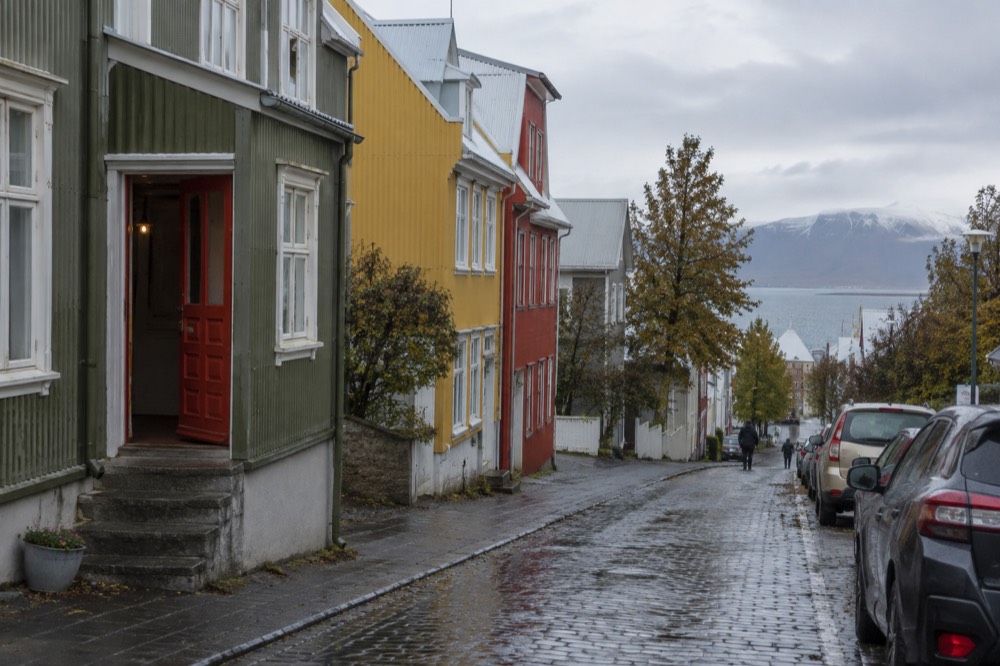
Nothing on the street itself is ticketed. The costs come only when you step inside a café, a shop or the church tower, and even the tower is optional, as the view from the free hill behind the church is nearly as good. For the shape of the wider city, the guide on walking around Reykjavik on foot covers how the districts connect.
Can You Walk Laugavegur With A Free Guide?
Yes, and it is the single best free activity on this street: the CityWalk free tour walks Laugavegur and its surroundings every day at 10:30 and 13:30, departing from Austurvöllur square in front of the Parliament building, lasting about 2 hours over roughly 2 km, with no fixed price at all, you pay the guide what you feel the walk was worth at the end. The tour is listed on freetour.com, rated 9.6 out of 10 across 6,683 freetour.com reviews, and it has run since 2014 under a local history graduate. It covers Parliament, Laugavegur, Lake Tjörnin, the old turf cottages of Grjótaþorp and Rainbow Street, finishing at City Hall.
The route notes on the operator's own page state that Harpa and Hallgrímskirkja are seen from a distance rather than entered, so treat the walk as the street-level story of the city rather than a building tour. Bookings open only about five days in advance and each booking is capped at six people, so a family of seven splits into two bookings. Payment at the end is cash or card, in krónur or any exchangeable currency, which removes the usual scramble for coins that tip-based tours involve elsewhere.
For a second guided option there is a smaller walk that starts from the opposite end of this route. Sweet Streets of Reykjavik is a GuruWalk listing that meets inside Harpa by the Rammagerdin store, runs Monday, Thursday, Friday, Saturday and Sunday at 11:00 in English, and is rated 4.6 out of 5 across 87 GuruWalk reviews. It is also tip-based, but it is cash only, so bring krónur: on a pay-what-you-want walk the tip is the entire payment, and a visitor with no cash cannot pay the guide at all. It takes bookings up to 10 people and needs a minimum of 5 to run, a real caveat outside high summer.
A third walk exists but is aimed at Spanish speakers, so it is not a practical choice for most readers of this page. The Tour of Reykjavik: its History, Culture, and Legends walk, run by Rainbow Tours, is Spanish only, meets at the Ingólfur Arnarson statue on Arnarhóll, and its GuruWalk listing is new, with no reviews yet. It runs Monday to Friday at 17:00 and Saturday and Sunday at 11:00, and it accepts cards, unlike the Sweet Streets walk. For an English-speaking visitor there are exactly the two guided options above, and that is the honest size of the field.
| Walk | Platform | Rating and scale | Language | Schedule |
|---|---|---|---|---|
| CityWalk free tour | freetour.com | 9.6 out of 10 across 6,683 reviews | English | Daily at 10:30 and 13:30 |
| Sweet Streets of Reykjavik | GuruWalk | 4.6 out of 5 across 87 reviews | English and Spanish | Mon, Thu, Fri, Sat, Sun at 11:00 |
| History, Culture and Legends | GuruWalk | No reviews yet, new listing | Spanish only | Mon-Fri 17:00, Sat-Sun 11:00 |
What Is Rainbow Street And Where Do You Find It?
Rainbow Street is Skólavörðustígur, the pedestrian lane that climbs from the top of Laugavegur up to Hallgrímskirkja, painted in rainbow stripes down its full length, and it is an ordinary public street, free to walk and photograph at any time of day or night. The paintwork is a joint initiative of the city and Reykjavik Pride, refreshed periodically, and it has become the single most photographed stretch of pavement in the country. The stripes run for about 250 metres, lined with design shops, galleries and cafés. This stop sits on a free walking route, Morning Walk From Harpa, Cash Tips.
The best light for the photo is generally late morning or early evening, when the sun angle lights the stripes without harsh shadow from the church end. The street is pedestrianised, so there is no traffic to work around, only other people doing exactly the same thing. Walk it slowly on the way up, because the shops on either side include small galleries that are free to enter and worth ten minutes even if you buy nothing.
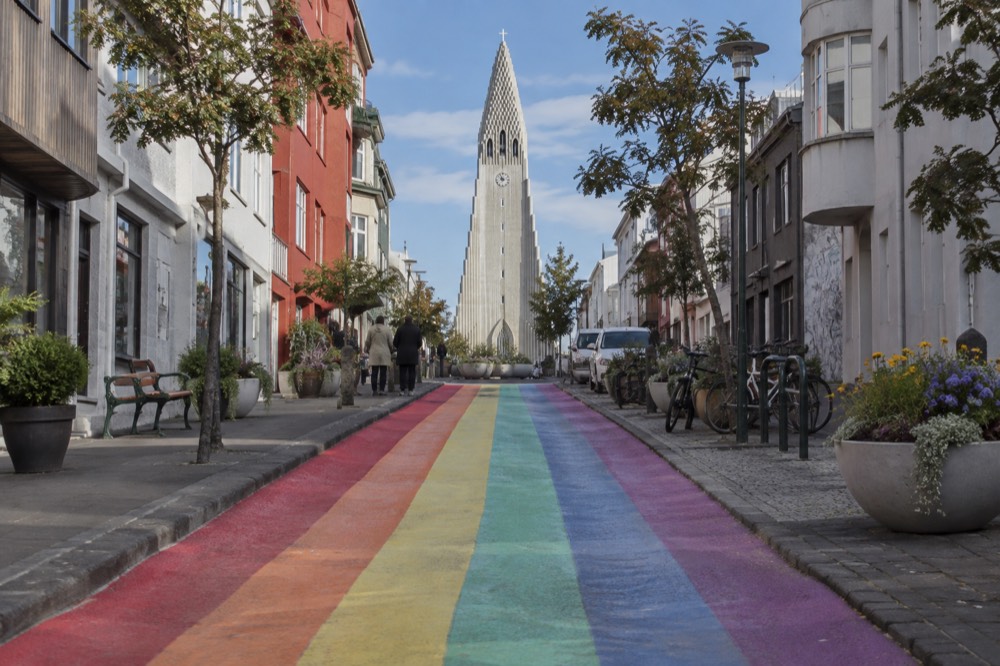
The city's official visitor board lists Rainbow Street among its free things to do in Reykjavik, and its status is unconditional: no hours, no fee, no season. The full treatment of the street, its history and the best angles sits in the site's guide to the free landmarks of the city centre. For now, note only that it is the natural continuation of Laugavegur's upper end and that no visit to the main street is complete without the climb.
Where Is The Street Art On Laugavegur?
Reykjavik has more than 160 mapped street-art works, and a large share of them sit on and immediately around Laugavegur and its side lanes, all of them free to see at any hour, painted on private walls with the owners' consent and maintained by the city's mapping project. The city itself states plainly that you do not have to pay to enjoy street art, and it maintains a public map of the works. Murals turn over year to year, so the exact pieces change, but the density does not.
The richest hunting grounds are the side streets off Laugavegur's lower half, particularly the lanes connecting toward Hverfisgata, and the walls around the car parks and courtyards that the main street hides behind its shopfronts. Look up as well as sideways: some of the best pieces sit on second-storey gable ends that are invisible from the pavement unless you walk the parallel streets too. There is no route, no ticket and no guide needed, though both free walking tours point out pieces along the way and the guides know which artists painted them.
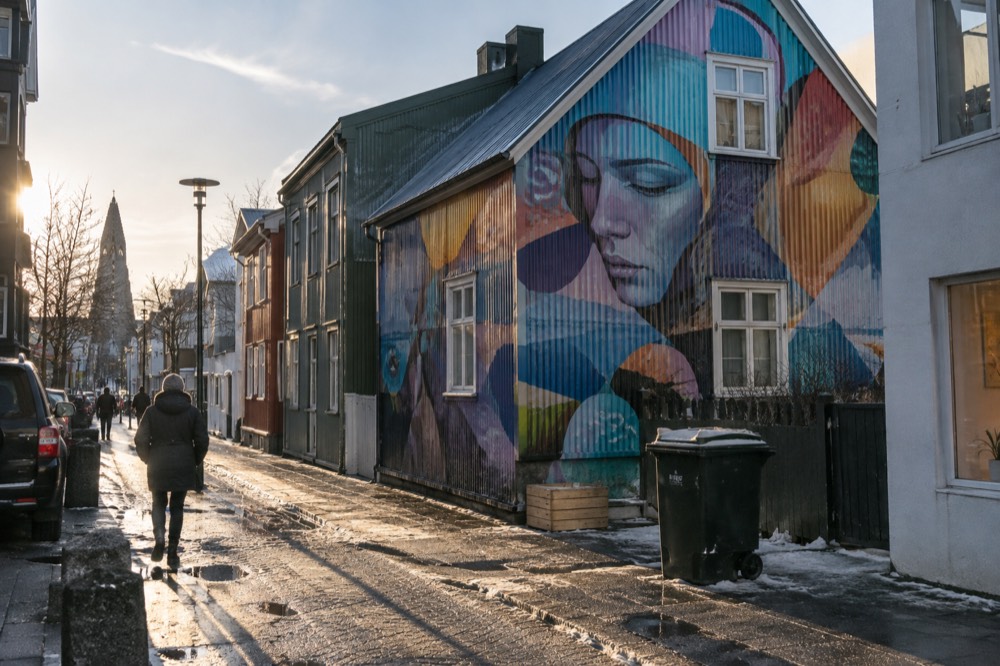
The city's own announcement of the mapping project, on reykjavik.is, is the source for the 160-plus figure and the best starting point if you want to hunt the full set. The dedicated guide on this site, Reykjavik street art, goes deeper into the artists and the districts.
Is Hallgrímskirkja Free To Enter From Laugavegur?
The church at the top of the Rainbow Street climb is free to enter as far as the nave is concerned, but the tower lift is paid, at 1,500 ISK for adults and 200 ISK for children aged 7 to 16 under the tariff in force since June 2026, and there is no advance booking for either. The nave is a quiet, vast concrete space with a free-standing organ that is sometimes played in free lunchtime and evening events. The tower is the city's classic viewpoint, and it is the one place on this walk where a genuine charge applies. One of the free walking routes passes through here: Spanish-Language Legends Walk.
The honest framing matters here. The church's own price list covers tower tickets only, and the nave's free entry is the practical reality rather than a loudly advertised promise, so treat "free to enter" as true for the main hall and nothing more. The tower fee is per person, payable on site, and the queue for the small lift can be slow in peak season. If you skip the tower, the free alternative is the wooded hill of Öskjuhlíð a couple of kilometres east, which this site covers in its own guide and which gives a panorama without a ticket. The wider set of guides lives on Free Things To Do In Reykjavik.
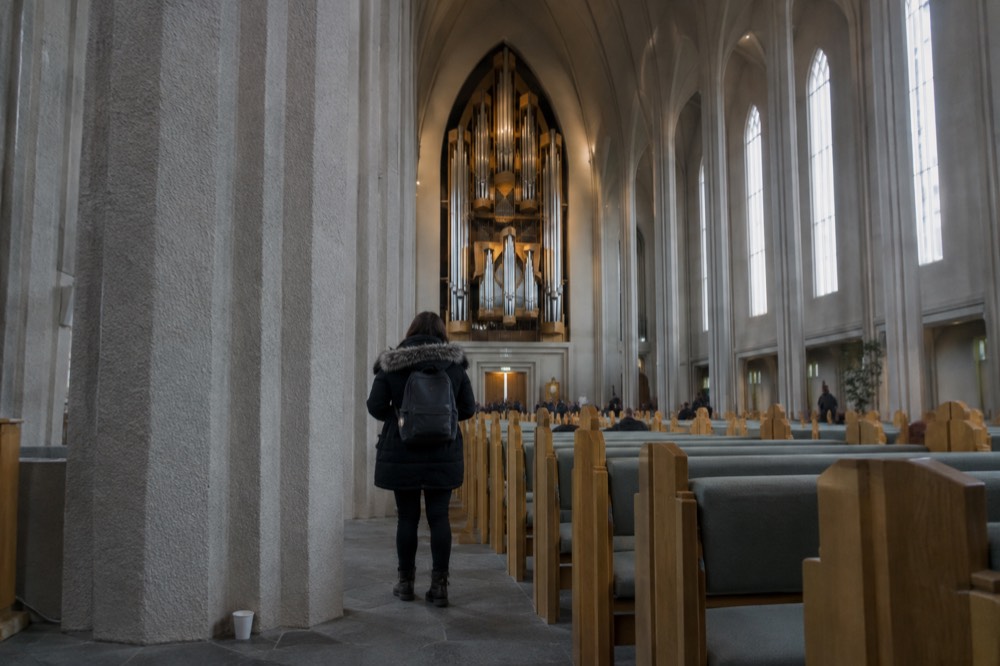
The church's official opening hours and price page carries the tower tariff, and the fuller treatment, including the sculpture garden behind the church, is on this site's Hallgrímskirkja guide. The Einar Jónsson sculpture garden behind the church is free year-round and is an easy two-minute detour from the top of the Rainbow Street climb.
Is Harpa Free To Visit At The Bottom Of The Walk?
Harpa concert hall's foyer and interior are free to enter during opening hours, which are 10:00 to 18:00 Sunday to Tuesday and 10:00 to 20:00 Wednesday to Saturday, and the ground-floor Hljóðhimnar sound installation is included in that free admission. The building sits on the harbour edge at the far end of the Laugavegur axis, and its honeycomb glass facade is the city's most photographed modern structure. The operator states it directly: admission to Harpa and Hljóðhimnar is free. One of the free walking routes passes through here: Spanish-Language Legends Walk.
The free part is the public interior, the foyers and the sound installation, not the concert halls themselves. Events are ticketed and priced per event, but a visit needs none of them. The building is at its best from outside at dusk in winter, when the geometric glass catches whatever light the sky offers, and from inside in the afternoon, when the fjord-side windows face the water. Both free walking tours pass or start near it, and the Sweet Streets walk meets inside it.
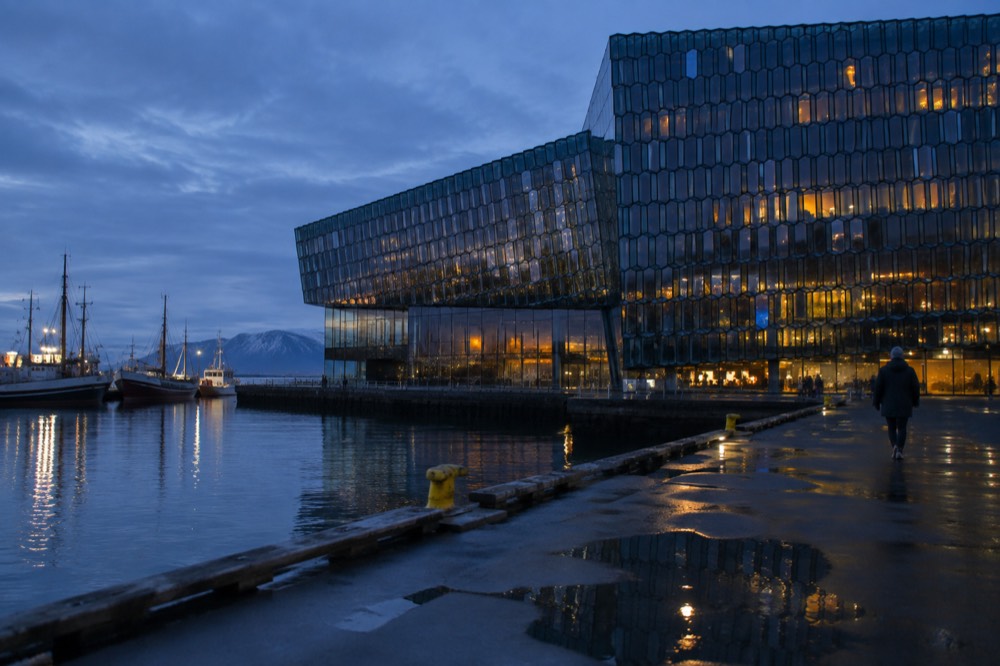
Harpa's own opening hours page is the source for the hours above, and this site has a full Harpa concert hall guide covering the building, the installation and what else the harbour district offers for nothing.
What Else Is Free Within A Few Minutes Of Laugavegur?
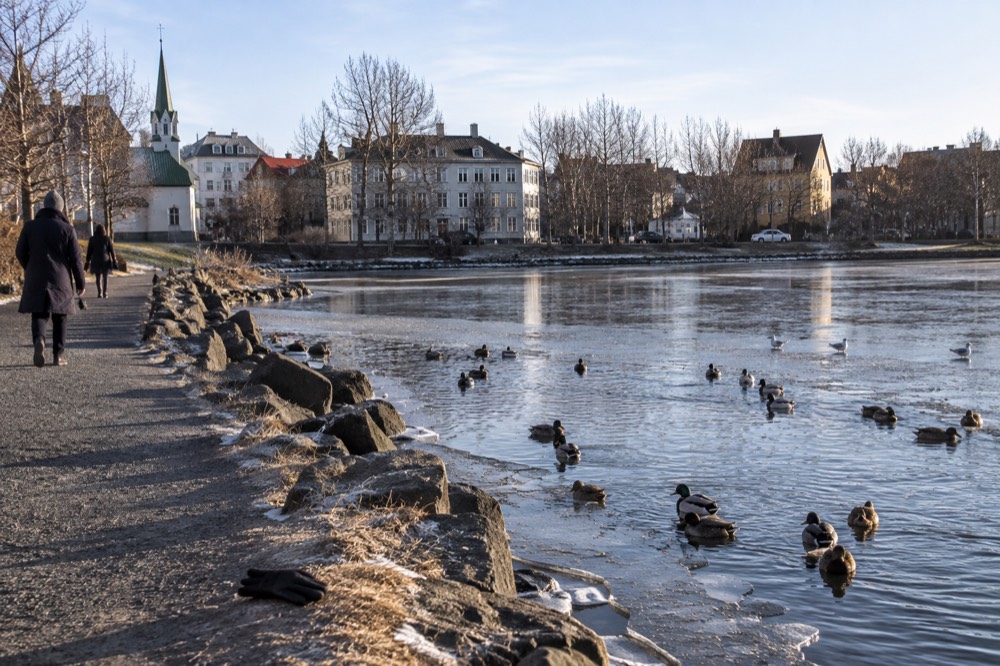
Within ten minutes' walk of the top of Laugavegur you can reach Tjörnin pond and Hljómskálagarður park, the Austurvöllur square where the free tour starts, the Einar Jónsson sculpture garden and the streets of Grjótaþorp, all public, all open around the clock and all free. The main street is the spine, but the free substance of the city centre sits on its flanks, and a loop rather than an out-and-back walk captures nearly all of it in under two hours of strolling.
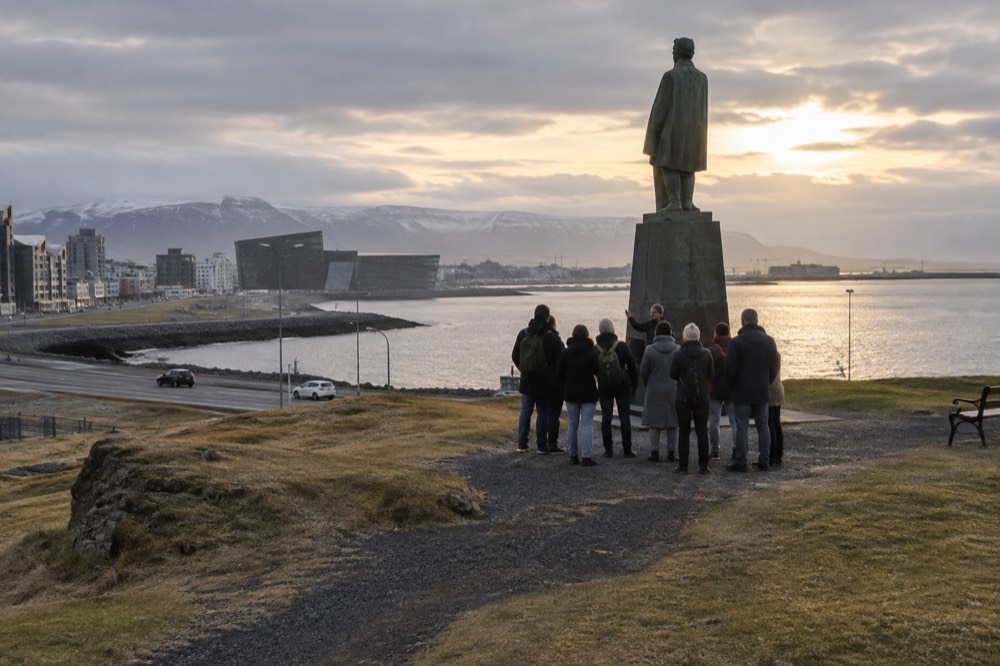
Tjörnin is the pond at the bottom of the ridge, ringed by Hljómskálagarður park, and in winter parts of it freeze into an informal skating surface while the geothermally warmed corner stays open for the birds. Austurvöllur, the square in front of the Parliament building, is where the CityWalk tour gathers by the Jón Sigurðsson statue, and it is a public park in its own right with cafés on its edges. Grjótaþorp, the small cluster of restored turf-and-timber cottages near the pond, is a named stop on the free tour and a two-minute detour from the lower end of Laugavegur.
| Free spot | Minutes from Laugavegur | What it is | Any condition |
|---|---|---|---|
| Rainbow Street | 0, it branches off the top end | Painted pedestrian lane | None |
| Tjörnin and Hljómskálagarður | 5 downhill from the lower end | Pond and park | None |
| Austurvöllur | 3 from the lower end | Public square and park | None |
| Einar Jónsson sculpture garden | 2 behind Hallgrímskirkja | Outdoor sculptures, free year-round | Museum interior is paid |
| Grjótaþorp | 4 near the pond | Restored old cottages | None |
| Harpa foyer and Hljóðhimnar | 8 downhill toward the harbour | Concert hall interior and sound installation | Opening hours apply |
The wider set of options, including the harbour front, the botanical garden and the hill viewpoints, is gathered in the site's free things to do in Reykjavik guide, and the map page can help with sequencing them.
What Does A Laugavegur Visit Actually Cost In 2026?
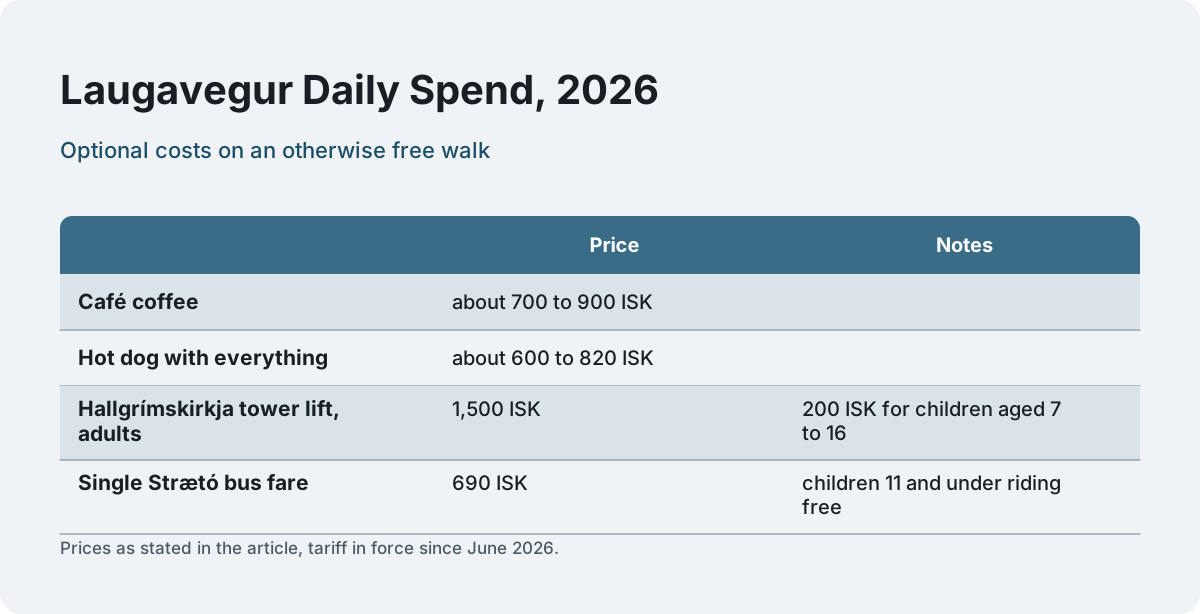
The walk itself costs nothing, and the realistic daily spend is driven by coffee, food and the optional church tower: a café coffee runs about 700 to 900 ISK, a hot dog with everything about 600 to 820 ISK, the Hallgrímskirkja tower 1,500 ISK, and a single Strætó bus fare 690 ISK if you bus in, with children 11 and under riding free. None of those are required. Tap water is safe and free everywhere, public toilets in buildings like City Hall and Harpa are free during opening hours, and standalone tourist-area toilets often charge around 200 ISK.
The one trap worth naming on this street is the geothermal beach: Nauthólsvík is not free in any season, despite the widely repeated claim of a free summer window. The official tariff is a flat 1,500 ISK adult entry year-round, matching the city pool tariff in force since May 2026. If someone on the street tells you the beach is free in summer, they are repeating an outdated guidebook line.
| Item along the walk | Reported price | Notes |
|---|---|---|
| Café coffee | 700-900 ISK | Petrol stations run 300-400 ISK |
| Hot dog with everything | 600-820 ISK | The classic budget meal |
| Hallgrímskirkja tower | 1,500 ISK adult | Children 7-16 pay 200 ISK |
| Strætó single bus fare | 690 ISK | Contactless or app, valid 75 minutes |
| Tap water | Free | Safe to drink citywide |
| Public toilet in a public building | Free | City Hall, Harpa, libraries during hours |
For the wider money picture, the site's Iceland on a budget guide covers accommodation, food and transport, and parking rules for anyone driving to the street's edge are in the free parking in Reykjavik guide. A final planning note on timing: the street's free sights are all outdoors and open around the clock, so the only schedules that constrain a Laugavegur day are the tour departure times, Harpa's opening hours and the church tower's ticket desk. Fit the tower and Harpa into the middle of the day, keep the murals and the Rainbow Street climb for whatever light the sky gives you, and the whole loop stays free except for the coffee.
Common Questions About Laugavegur In Reykjavik
Is Laugavegur free to walk?
Yes, completely. It is an ordinary public street with no gate, fee or ticket, open at any hour. The only charges along it are optional: shops, cafés and the 1,500 ISK tower lift at Hallgrímskirkja at the top end.
How long does it take to walk Laugavegur?
The street itself is about 1.4 km, so a straight end-to-end walk takes 20 to 25 minutes. A realistic loop, taking in Rainbow Street, Hallgrímskirkja, Tjörnin and Harpa, fills about two hours at a sightseeing pace, which is roughly the length of the free guided walk.
Is there a free walking tour of Laugavegur?
Yes. The CityWalk free tour runs daily at 10:30 and 13:30 from Austurvöllur, lasts about 2 hours, and charges nothing up front, you tip the guide what you feel at the end. It is rated 9.6 out of 10 across 6,683 freetour.com reviews and covers Laugavegur among its named stops.
What is Rainbow Street and is it on Laugavegur?
Rainbow Street is Skólavörðustígur, the painted pedestrian lane that branches off the top end of Laugavegur and climbs to Hallgrímskirkja. It is a public street, free to walk and photograph at any time.
When is the best time to walk Laugavegur?
Morning light suits the uphill stretch and the Rainbow Street photo, and the street is quietest before about 10:00. Winter afternoons are short but the free Harpa foyer stays open until 18:00 or 20:00 depending on the day, giving a warm endpoint. The 10:30 free tour conveniently walks the street in the morning light.
Can you see the northern lights from Laugavegur?
Rarely, because the street lighting is bright. The free public viewing spots are the darker parks and headlands around the city, and the season runs September to April. From Laugavegur, the harbour edge and the Öskjuhlíð hill are the nearest workable options on a clear, active night.