What Can You Do For Free In Reykjavík?
A straight answer to what is genuinely free in Reykjavik: two tip-based walking tours, twenty-plus no-ticket attractions, free events, and the traps that are not free at all.
What Can You Do For Free In Reykjavík?
You can take a twice-daily tip-based walking tour, walk the Old Harbour and Grandi quays, see the Sun Voyager and Rainbow Street, sit in the Kvika geothermal foot bath, wander the Botanic Garden and Öskjuhlíð woods, watch for northern lights from public parks between September and April, and turn up to free festivals such as Culture Night and the 17 June National Day celebrations. Around twenty attractions in the city charge nothing at all.
That is the short version, and it is a longer list than most visitors expect. The city's own tourism office maintains a free-things page that reads like an afterthought, but the underlying reality is generous: an outdoor sculpture you can touch, a concert hall foyer with no admission charge, a pond full of birds in the middle of the capital, and a nature reserve ten minutes from the bus stop. The catch is that several famous "free" things are not free at all, and a page that lists them without saying so is worse than no page. This one separates the two piles carefully.
The single best starting point costs nothing up front. Two operators run tip-based walks in the city, and between them they cover the English and Spanish-speaking market. One is the long-running dominant walk, the other a smaller, newer option.
Are The Free Walking Tours In Reykjavik Really Free?
Yes, in the sense that there is no upfront price: both walks run on tips, and you decide the amount at the end. For an English speaker there are exactly two options, CityWalk's twice-daily tour and the smaller Sweet Streets walk from Harpa. A third walk, the Rainbow Tours legends tour, runs in Spanish only. Tip norms on these walks run roughly 2,000 to 5,000 ISK per person, and Sweet Streets takes cash only. One of the free walking routes passes through here: Spanish-Language Legends Walk.
CityWalk is the established free walk here, family-run since 2014. It meets every day at 10:30 and 13:30 in front of the Parliament building on Austurvöllur square, covers about 2 km over two hours, and finishes at City Hall. It is listed on freetour.com, where it is rated 9.6 out of 10 across 6,683 freetour.com reviews, the largest review base of any walk in the city. The tour is English only, the route passes Parliament, Laugavegur, Tjörnin pond and Rainbow Street, and the price is whatever you choose to give the guide at the end, in cash or by card.
The second option is smaller and newer. Sweet Streets of Reykjavik runs on GuruWalk, meets inside the Harpa concert hall by the Rammagerdin store, and is rated 4.6 out of 5 across 87 GuruWalk reviews. It runs Monday, Thursday, Friday, Saturday and Sunday at 11:00 in English, with occasional Spanish departures that follow no repeating weekday, so the English schedule is the one to plan around. It takes bookings up to 10 people and needs at least 5 to run, a real caveat for anyone visiting in the quiet season. It is cash only, which matters more than it sounds: on a pay-what-you-want walk the tip is the entire payment, so a visitor with no cash cannot pay the guide at all.
A third walk exists, the Rainbow Tours history and legends tour, but it is Spanish only, meeting at the Arnarhóll statue with a rainbow umbrella, running Monday to Friday at 17:00 and weekends at 11:00. It is newly listed on GuruWalk with no reviews yet there. If you are planning a Spanish-language visit it is a genuine option; if not, the two walks above are the whole English-speaking field, and no page should pretend otherwise.
Which Museums And Galleries Can You Enter Without Paying?
Honest answer: almost none of the big museums, but with two real exceptions. Entry to the Reykjavik City Library is free for everyone, and every major museum in the city, the Art Museum, National Museum, National Gallery and the City Museum branches, admits visitors aged 17 and under for free, along with disabled visitors. Adults pay at all of them, and there is no free day.
The adult figures are worth knowing so the free exceptions stand out clearly. The Reykjavik Art Museum charges adults 2,550 ISK across all three of its sites on one 24-hour ticket. The National Museum charges 3,300 ISK, the National Gallery 2,500 ISK, and the Settlement Exhibition 3,100 ISK. None of them has a free weekday, a free evening or a resident-free rule, despite what older guidebooks repeat. A family with teenagers pays nothing at any of them, which is the largest genuine saving in the museum column.
The library is the other free door. Entry to Reykjavik City Library costs nothing, and you can read, work and warm up without buying anything; only borrowing requires a card, at 3,300 ISK a year, free for under-18s and over-67s. The Nordic House offers a free library card to anyone over 18, valid for a year, though the building's own admission situation is not clearly published, so treat the card as the certain part and the building entry as unconfirmed.

| Museum or library | Adults | Under 18 | Genuinely free? |
|---|---|---|---|
| Reykjavik City Library | Free entry | Free entry | Yes, entry |
| Reykjavik Art Museum (3 sites) | 2,550 ISK | Free | Under-18s only |
| National Museum of Iceland | 3,300 ISK | Free | Under-18s only |
| National Gallery of Iceland | 2,500 ISK | Free | Under-18s only |
| Settlement Exhibition | 3,100 ISK | Free | Under-18s only |
| Árbæjarsafn open-air museum | 2,550 ISK | Free | Under-18s only |
If museums are the reason you are here, the free museums in Reykjavik guide goes deeper on the under-18 rule and the library network.
What Outdoor Spaces And Viewpoints Cost Nothing?
Most of the best of them. The Sun Voyager sculpture, Rainbow Street, Tjörnin pond, the Old Harbour and Grandi waterfront, the Botanic Garden, the Öskjuhlíð woods and the Kvika geothermal foot bath are all free with no conditions. Viðey island has no admission charge, but the ferry over is 2,500 ISK for an adult, so it is conditionally free, not free.
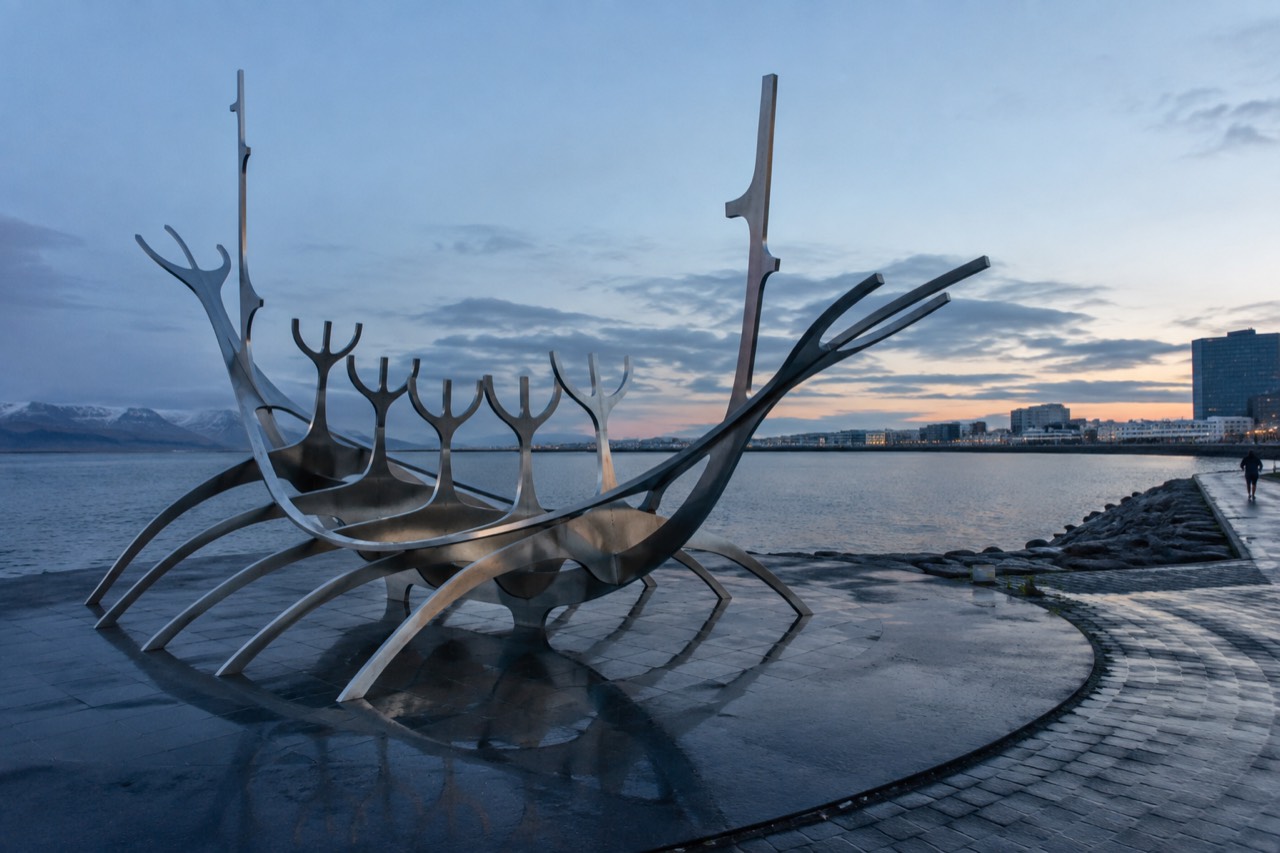
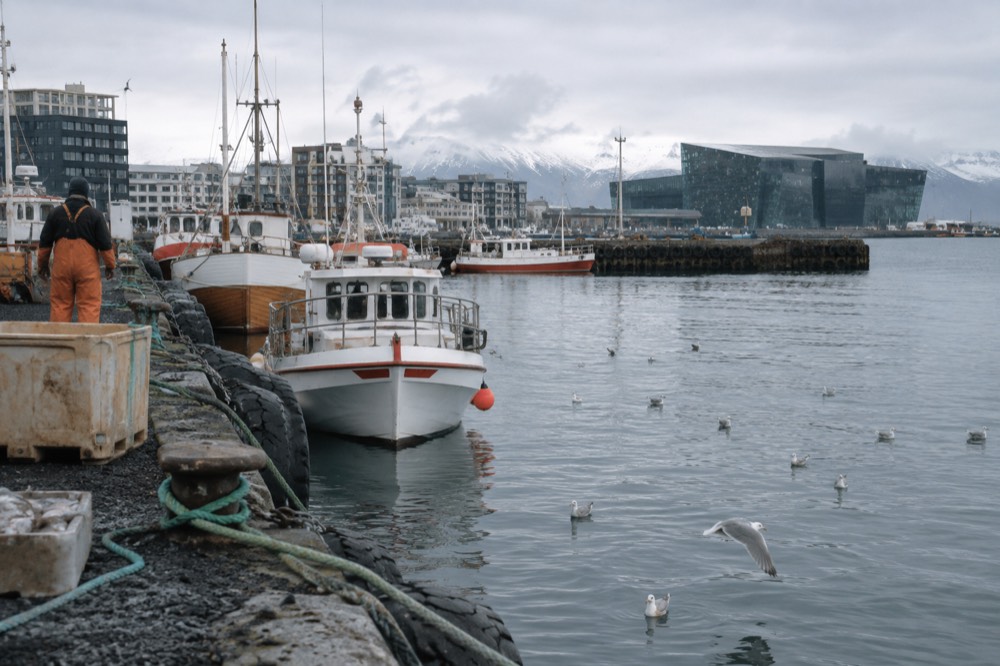
The waterfront is the obvious free spine of the city. The Old Harbour and Grandi district offer free quayside walking year-round, with the Þúfa mound giving a 360-degree view over the water, and the Sun Voyager steel sculpture sitting on the Sæbraut path a short walk north. Rainbow Street, the painted Skólavörðustígur hill lane, is a public street you can photograph at any hour without a ticket. Tjörnin pond and the Hljómskálagarður park beside it are open green space in the centre, and the Einar Jónsson sculpture garden behind Hallgrímskirkja is free year-round, a detail many visitors miss entirely. A free walk covers this ground: Morning Walk From Harpa, Cash Tips.
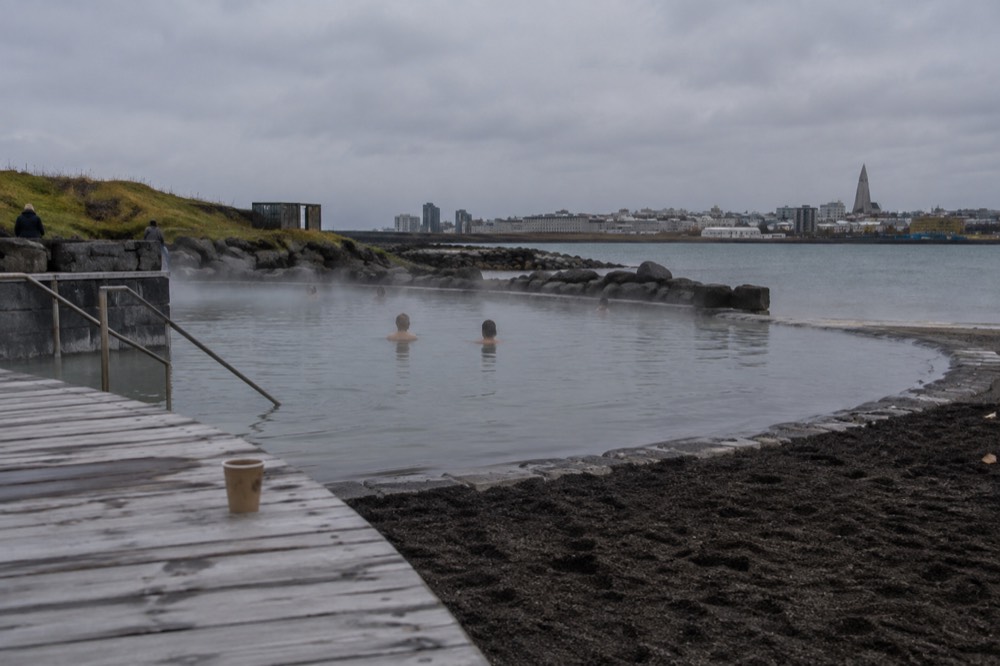
Two of these deserve their own pages: the Grótta lighthouse guide covers the tidal causeway and the May-to-July nesting closure, and the Sun Voyager guide covers the sculpture itself. On the Seltjarnarnes peninsula, the Kvika foot bath is a small stone pool of warmed seawater with no entrance fee, one of the few places in the country where a geothermal soak costs literally nothing.
Viðey island is the one that trips people up. The island itself has no admission, and its trails and views are open to all, but you reach it on the Elding ferry, which charges 2,500 ISK per adult, 1,250 ISK for children 7 to 17, and nothing for under-7s, running daily in summer and weekends only in winter. Free to be there, not free to get there. The Viðey island guide runs through the ferry timetable in detail.
Where Can You Watch The Northern Lights Without Paying?
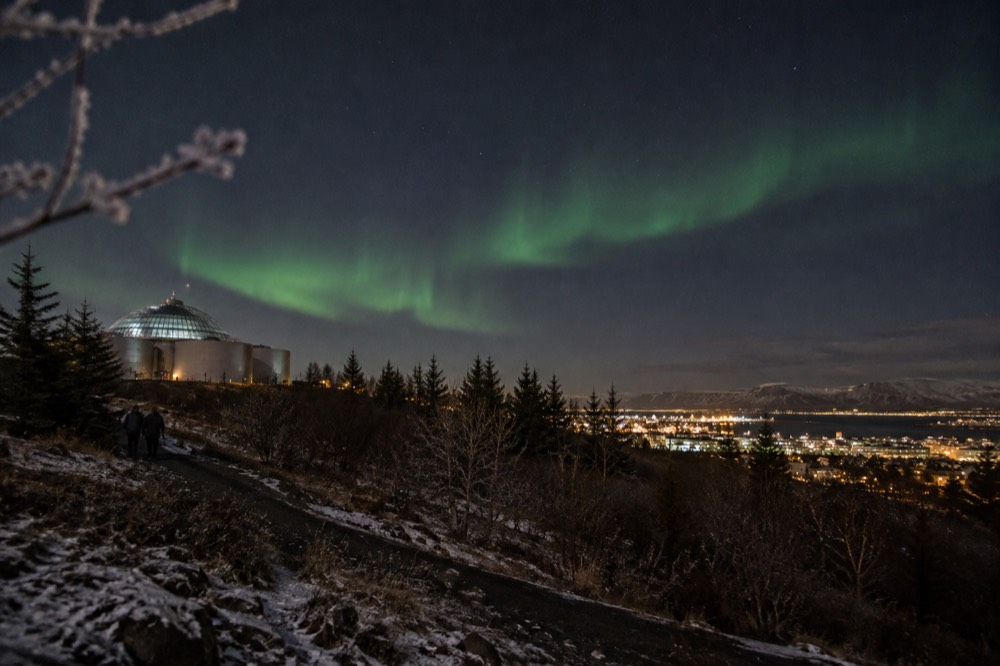
From a string of public spots in and around the city, between September and April, whenever the sky is clear and the aurora is active. The named free viewing areas include Klambratún, Öskjuhlíð hill, Grótta on the Seltjarnarnes peninsula, Elliðaárdalur valley, Rauðhólar and Úlfarsfell. No ticket, no tour, no fee; the only costs are transport and patience.
The season matters more than the spot. Visit Reykjavik's own guidance gives September to April as the window, and early 2026 sat near a solar maximum, which raised the odds of strong displays. Within the city the trick is simply to get away from the brightest lights, which is why the hilltops and peninsulas on that list outperform the middle of Laugavegur. Grótta is the classic choice for its dark northern horizon, with the caveat that the causeway floods at high tide and the whole area is closed to visitors from 1 May to 15 July for the arctic tern nesting season, viewable from the mainland only. Everything else covered here is indexed on Free Things To Do In Reykjavik.
Öskjuhlíð is the easiest fallback: wooded trails climb the hill behind Perlan, and the summit is one of the listed aurora viewpoints, free to walk at any hour. Elliðaárdalur, a green valley with paved paths through the eastern suburbs, is another listed spot that costs nothing to reach by city bus. The fuller spot-by-spot breakdown lives in the northern lights in Reykjavik guide, including how the bus fares work.
What Free Events Fill The Reykjavik Calendar?
Four big ones, all genuinely free: Culture Night in August, the Winter Lights Festival with its Museum Night and Pool Night in February, the 17 June National Day celebrations, and the New Year's Eve bonfires. Culture Night is the largest, a citywide day of free museum entry, street performance and fireworks, and it even runs free city buses for an hour after the fireworks end.
Culture Night, Menningarnótt, is the one to build a trip around if the dates line up. The official programme describes all events as free of charge, museums and galleries open free or late, and the Strætó buses run free between 22:00 and 23:00 to carry the crowds home after the fireworks. The Winter Lights Festival in early February is built on the same logic: light installations trail from the Hallgrímskirkja area down to City Hall, and its Museum Night opens participating museums free, with a Pool Night giving free swimming at participating pools between 17:00 and 21:00. The 17 June National Day brings a parade from Hallgrímskirkja at 13:00, the official ceremony on Austurvöllur at 11:00, and concerts in the parks through the afternoon, all without a ticket.
New Year's Eve is the quietest free spectacle of the four: around ten community bonfires, áramótabrennur, are lit across the city at about 20:30, open to anyone, with personal fireworks banned at the sites themselves. None of these events needs a booking, a pass or a card, which is exactly why they belong on a list like this and the paid festivals do not.
What Is Not Free, Even Though Everyone Says It Is?
Three big traps: the Nauthólsvík geothermal beach, which charges 1,500 ISK year-round with no free summer window; the Perlan observation deck, which cannot be bought separately from a full ticket; and anything described as "free with the Reykjavik City Card", because the card itself is paid, at 6,100 ISK for 24 hours. The Hallgrímskirkja tower also charges, 1,500 ISK from June 2026, though the church nave itself costs nothing.
Nauthólsvík is the single biggest trap in the city. The widely repeated claim of a free summer window from mid-May to mid-August is contradicted by the beach's own tariff, which is one flat entrance pass with no seasonal split, matching the city pool tariff that took effect in May 2026. Adults pay 1,500 ISK, children 10 to 17 pay 400 ISK, and under-10s are free with an adult. It is a lovely spot and cheap by local standards, but it is not free, and a budget page that calls it free is costing its reader 1,500 ISK. The genuinely free geothermal alternative is the Kvika foot bath on the other side of the peninsula.
Perlan is subtler. The observation deck on top of Öskjuhlíð hill is included with every Perlan ticket and cannot be purchased separately, so there is no deck-only price at any figure. The free move here is to skip the building and walk the hill itself: the Öskjuhlíð woods and trails are free, and the summit view is the same view the deck sells. Hallgrímskirkja splits the same way, the tower lift costs 1,500 ISK for an adult while the nave below it is free to enter, and the Einar Jónsson sculpture garden beside it is free too.
The City Card trap is the one that spreads furthest online. The card costs 6,100 ISK for 24 hours, 8,500 for 48 and 10,500 for 72, so anything it unlocks is paid, just prepaid. It can be good value for a museum-heavy day, and the Reykjavik City Card guide runs the arithmetic, but "free with the City Card" is never the same word as free.
| Claimed free | Reality | Adult price |
|---|---|---|
| Nauthólsvík geothermal beach | Paid year-round, no free summer window | 1,500 ISK |
| Perlan observation deck | Not sold separately from a full ticket | Ticket only |
| Hallgrímskirkja tower | Lift is paid; the nave is free | 1,500 ISK |
| Anything "free with the City Card" | The card itself is paid | 6,100 ISK / 24h |
| Reykjavik swimming pools | Cheap, not free | 1,500 ISK |
The pattern across all three traps is the same: the free version of each thing exists one step away from the paid one. The free beach soak is Kvika, the free hilltop is the Öskjuhlíð trail, the free church experience is the nave, and the free museum door is the one marked under-18. For a wider net, the what's free in Iceland piece extends this logic beyond the capital.
How Much Can A Free Day In Reykjavik Actually Look Like?
A full day, honestly. Start at Austurvöllur on a tip-based walk at 10:30, finish at City Hall by the pond, walk the waterfront to the Sun Voyager and Grandi, sit in the Kvika foot bath, and end the day on Öskjuhlíð hill. Direct spending for one person: a 690 ISK bus fare if you use one, and a tip for the guide. Everything else on that itinerary charges nothing.
That is the shape of the answer to the question this page asks. The city gives away its waterfront, its sculpture, its parks, its hilltops, its library, its festivals and, on a clear winter night, its sky. What it charges for is the tower lifts, the museums, the beach and the card, and every one of those has a free counterpart within walking distance. A visitor who knows which pile each item sits in can spend a day in one of Europe's priciest capitals without buying a single attraction ticket.
There are quieter free corners worth a detour too. The Elliðaárdalur valley guide covers the salmon river and lava-field paths ten minutes from the centre, and the Hallgrímskirkja guide explains what the free nave and sculpture garden offer against the paid tower lift.
The walks below are where most people should start, because a local guide's two hours of context makes every free stop afterwards mean more.
Common Questions About Free Things In Reykjavik
What Can You Do For Free In Reykjavík?
Take a tip-based walking tour, see the Sun Voyager and Rainbow Street, walk the Old Harbour and Grandi, visit the Botanic Garden and the Einar Jónsson sculpture garden, soak your feet in the Kvika foot bath, hike Öskjuhlíð or Mount Esja, watch northern lights from public parks between September and April, and attend free festivals such as Culture Night and the 17 June celebrations. Around twenty city attractions charge nothing at all.
Are the free walking tours in Reykjavik actually free?
There is no upfront price on either English-language walk. CityWalk meets daily at 10:30 and 13:30 at Austurvöllur and Sweet Streets runs Monday, Thursday, Friday, Saturday and Sunday at 11:00 from Harpa, both on a pay-what-you-feel basis. Typical tips run 2,000 to 5,000 ISK per person, and Sweet Streets takes cash only.
Is the Nauthólsvík geothermal beach free?
No. It charges 1,500 ISK for adults year-round, with no free summer window, despite the widely repeated claim of one. Children 10 to 17 pay 400 ISK and under-10s are free with an adult. The genuinely free geothermal option in the city is the Kvika foot bath at Seltjarnarnes.
Is the Hallgrímskirkja tower free?
The tower lift costs 1,500 ISK for an adult. The church nave below it is free to enter, and the Einar Jónsson sculpture garden behind the church is free year-round, so the building offers both a paid and a free experience.
When can you see the northern lights in Reykjavik for free?
Between September and April, on clear nights with aurora activity, from free public spots such as Grótta, Öskjuhlíð, Klambratún, Elliðaárdalur and Rauðhólar. No tour or ticket is needed, though Grótta is closed to visitors from 1 May to 15 July and its causeway floods at high tide.
Are museums in Reykjavik free on any day?
No. The Art Museum, National Museum, National Gallery and City Museum branches charge adults every day and have no free weekday. Visitors 17 and under and disabled visitors get in free everywhere, and entry to the Reykjavik City Library is free for everyone.