Can You Go To The Blue Lagoon For Free?
No, the Blue Lagoon is a private spa where every visitor needs a paid ticket. This guide covers the genuinely free geothermal alternatives in and around Reykjavik, from the Kvika foot bath to Pool Night.
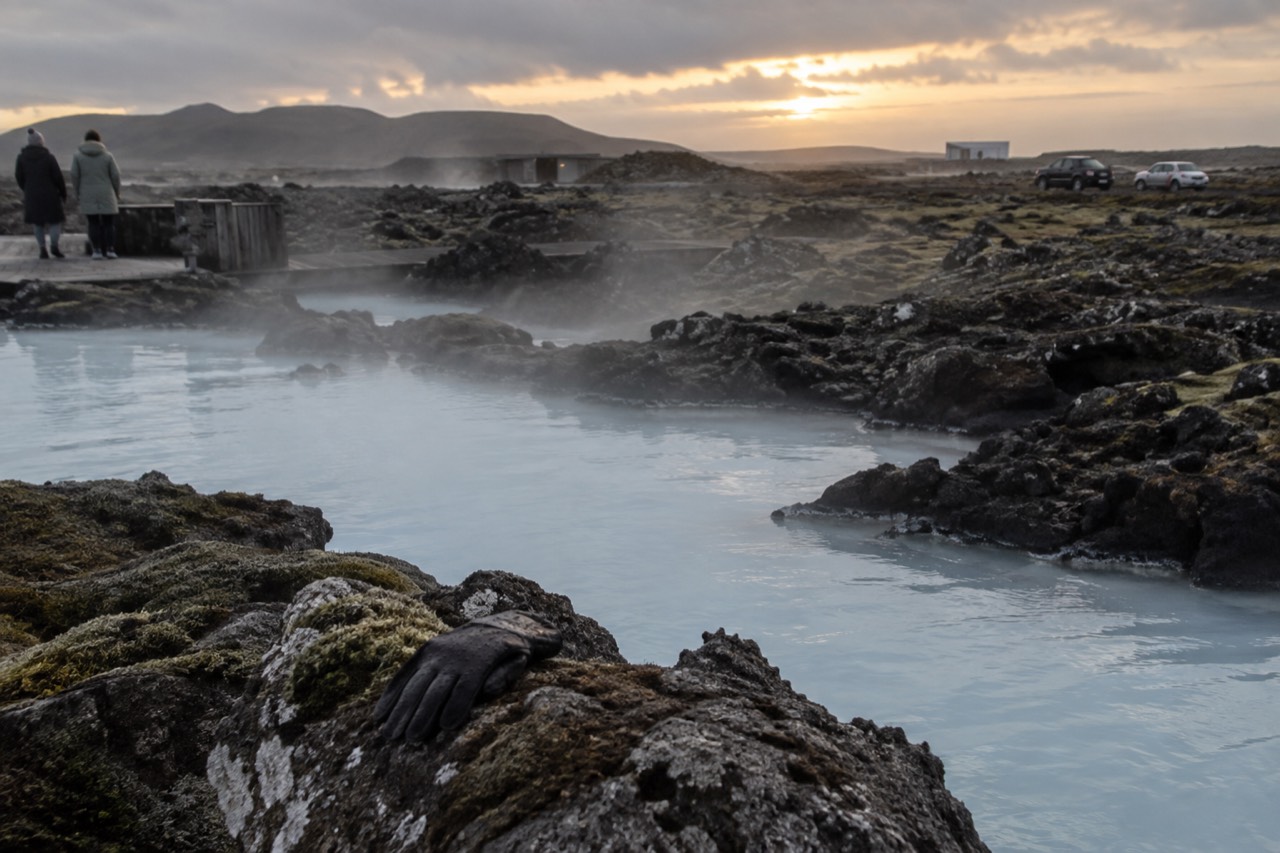
The Blue Lagoon is a private spa with a gate, a booking calendar and a capacity limit, not a public pool you can wander into. That single fact answers most of the question, but it leaves a better one open: if the famous milky-blue water is off the free list, what geothermal experiences in and around Reykjavik actually cost nothing? The answer includes a free seawater foot bath, one festival evening a year when the city's pools open their doors for free, and a hot river you can bathe in without paying anyone, as long as you read the parking fine print first.
Can You Go To The Blue Lagoon For Free?
No. The Blue Lagoon is a private, ticketed spa and every visitor needs a paid, pre-booked entry slot; there is no free viewing area, free hour or resident discount that makes soaking free. The ticket price moves with season and demand, so the live figure sits on the lagoon's own booking page rather than being repeated here. Nothing in the city's own free-attraction lists includes it.
The confusion usually starts with the word "lagoon". Iceland is full of natural hot pools, run-off streams and warm river bends that cost nothing, and several of those really are free, so the idea that the country's most famous pool might also be free feels plausible. It is not. The Blue Lagoon is a commercial operation on the Reykjanes peninsula, a drive of well under an hour from the capital, and its whole model is built on timed, paid entry with towels, robes and skincare bundled into tiers.
The second source of confusion is marketing language. Spa packages, hotel partnerships and Iceland stopover guides sometimes describe things like "free entry included with your room" or "free welcome mask", and a skim-read turns that into free entry. Included-with-purchase is not free, it is a bundle, and the bundle's price is simply hidden inside another price. The same applies to any pass or card that bundles lagoon entry: if you paid for the pass, the lagoon was not free.
What you can do is plan around it. The table below sets out the water-based experiences near Reykjavik that people ask about in the same breath as the Blue Lagoon, with what each one really costs. It is the short version of the rest of this article.
| Experience | Genuinely free? | What you actually pay |
|---|---|---|
| Blue Lagoon | No | Paid ticket, price on the lagoon's own booking page |
| Nauthólsvík geothermal beach | No | 1,500 ISK adults, 400 ISK ages 10 to 17, free under 10 with an adult |
| Reykjavík public pools (e.g. Laugardalslaug) | No | 1,500 ISK adults, 400 ISK ages 10 to 17, free under 10 with an adult |
| Sundlauganótt (Pool Night, Winter Lights Festival) | Yes | Free 17:00 to 21:00 at participating pools, one festival evening |
| Kvika geothermal foot bath | Yes | No entrance fee at all |
| Reykjadalur hot river (Hveragerði) | Partly | Free to hike and bathe, paid parking at Árhólmar, no published tariff |
If your heart is set on the Blue Lagoon experience specifically, the honest comparison is with is the Blue Lagoon worth it, which weighs the ticket against what else the money buys in Iceland. If your goal is simply warm water, steam and a good story, everything below costs nothing.
What Can You Do In Reykjavik For Free Instead?
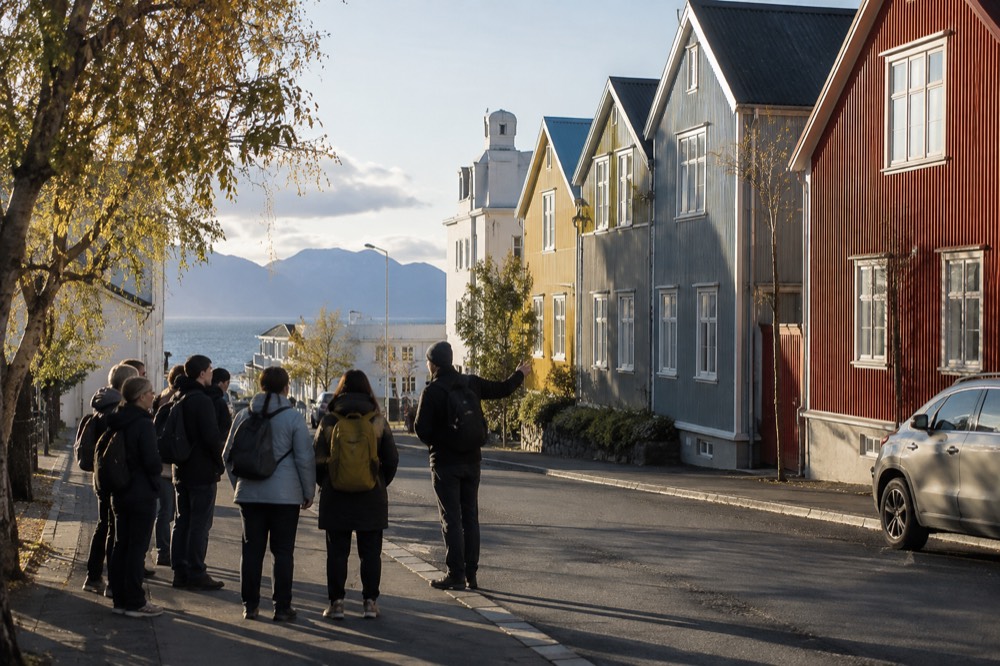
The closest free equivalent in the city is a pay-what-you-want walking tour. Two walks suit English speakers: CityWalk's twice-daily city walk, rated 9.6 out of 10 across 6,683 freetour.com reviews, and the smaller Sweet Streets walk from Harpa, rated 4.6 out of 5 across 87 GuruWalk reviews. Neither charges anything up front; you tip the guide what you feel the walk was worth.
A free walking tour is not a hot soak, but it solves the same problem the Blue Lagoon solves for many visitors, which is turning a strange place into a familiar one in about two hours. Reykjavik's walk scene is small and honest about being small: for an English speaker there are exactly two options, plus one Spanish-language walk, and pretending otherwise would invent a choice that does not exist.
The long-running, dominant walk is CityWalk's free tour, listed on freetour.com and running since 2014. It meets every day in Austurvöllur square, in front of the Parliament building, at 10:30 and 13:30, covers about two kilometres over two hours, and finishes at City Hall. The route names Parliament, Laugavegur, the Tjörnin pond, the old timber-clad Grjótaþorp quarter and Rainbow Street, with Harpa and Hallgrímskirkja seen from a distance. It is English only, and bookings open only a few days ahead, with a maximum of six people per booking.
The smaller option is Sweet Streets of Reykjavik, a GuruWalk listing run by a local guide. It runs in English on Monday, Thursday, Friday, Saturday and Sunday at 11:00, meeting at the Harpa building; the guide's own written meeting instructions on the GuruWalk page are the ones to follow, since the structured address and the guide's description sit a few hundred metres apart. It takes bookings up to ten people and needs at least five to run, which matters if you are visiting in the quiet season. One thing to know before you go: this walk is cash only, and on a pay-what-you-want walk the tip is the entire payment, so bring notes.
| Walk | Platform | Rating | Language | Schedule | Meets at |
|---|---|---|---|---|---|
| CityWalk free tour | freetour.com | 9.6 out of 10 across 6,683 reviews | English only | Daily, 10:30 and 13:30 | Austurvöllur, by the Parliament building |
| Sweet Streets of Reykjavik | GuruWalk | 4.6 out of 5 across 87 reviews | English and Spanish | Mon, Thu, Fri, Sat, Sun at 11:00 | Harpa building, follow the guide's own instructions |
A third walk exists, the Rainbow Tours history and legends walk, but it runs in Spanish only, once a day, so it is not a real option for most English-speaking readers. On tipping: guides on these walks rely on tips as their income, and typical amounts run around 2,000 to 5,000 ISK per person, with cash preferred. Cancellation on the GuruWalk side is free, with the guide asking that you cancel rather than simply not show up; no deadline or fee is published, so cancel as early as you can.
Wondering which walk fits your first morning in the city? The free CityWalk tour is the safe default, and you can see it on Free Things To Do In Reykjavik alongside every other no-cost stop in the capital.
Is Nauthólsvík Geothermal Beach Free?
No. Nauthólsvík geothermal beach charges year-round under the city tariff that took effect in May 2026: adults pay 1,500 ISK, children up to 9 are free with an adult, and ages 10 to 17 pay 400 ISK. The often-repeated claim of a free summer window between mid-May and mid-August is contradicted by the beach's own flat-fee price list, which has no seasonal split at all.
This is the trap that catches the most people, because the "free in summer" claim is repeated across older guides and forum threads with total confidence. The beach's own site tells a different story: one flat entrance pass, all year, matching the citywide pool tariff. The idea of a summer free period appears to be a memory of something that no longer exists, or never did in the form described.
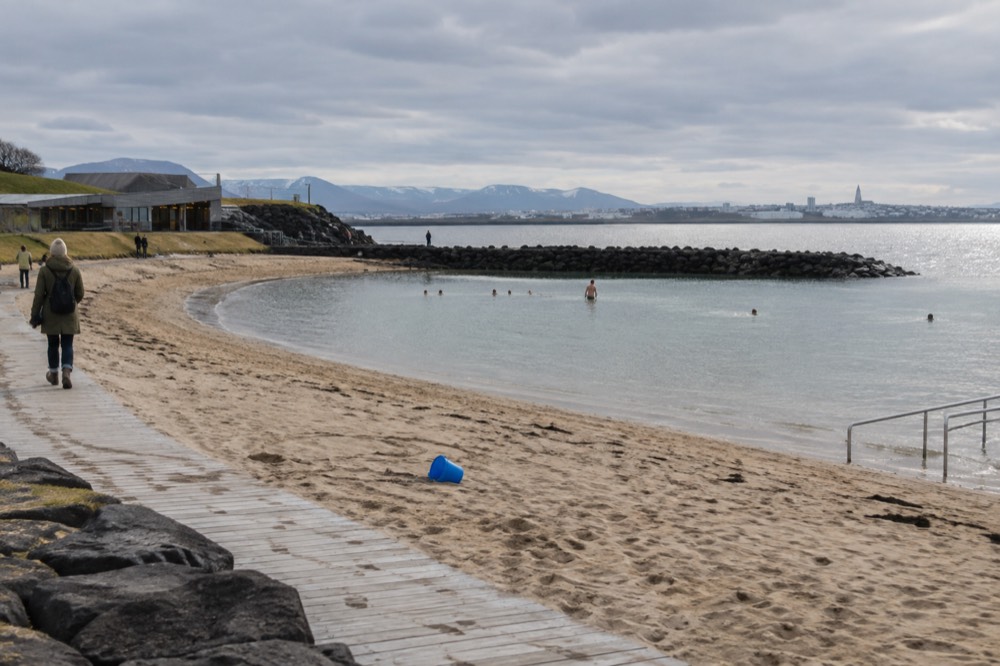
What you get for the 1,500 ISK is genuinely pleasant: a golden-sand cove on the Nauthólsvík spit where cold North Atlantic water is mixed with pumped-in geothermal warm water, plus hot tubs and changing facilities. It is cheap by Icelandic standards and lovely on a still day. It is simply not free, and on a site like this one that distinction is the whole point. The full picture, including what the fee covers, is in the Nauthólsvík geothermal beach guide, and the live tariff is on the beach's own site.
Is There Any Free Geothermal Soak Near The City?
Yes. The Kvika foot bath on the Seltjarnarnes shoreline, at the western tip of the capital area, is genuinely free, with no entrance fee at any time of year. It is a small, shallow, seawater pool warmed by geothermal outflow, a few minutes' walk from the nearest bus stop, and the city's tourism office states plainly that there is no charge.
Kvika is the closest thing Reykjavik has to a free Blue Lagoon moment. It is modest, a low stone basin by the coastal path rather than a spa, but the essentials are the same: warm mineral water, sea air, and a view out over the Faxaflói bay to the Snæfellsnes peninsula on a clear evening. You sit on the edge, roll up your trousers or bring a towel, and soak your feet while the tide comes in. Locals treat it as an evening ritual, and on aurora nights in winter it doubles as a viewing spot, since the western shoreline is one of the darker edges of the city.
Practical notes: the foot bath is shallow by design, it is not for swimming, and there are no changing rooms, so arrive ready to sit. The walk out along the Seltjarnarnes coast passes the Grótta lighthouse causeway, which is free too but closed to visitors between 1 May and 15 July for the arctic tern nesting season, and flooded at high tide the rest of the year. The city's own page for the foot bath confirms the no-fee status, and it is on Visit Reykjavik's Kvika listing.
When Can You Get Into Reykjavik Pools For Free?
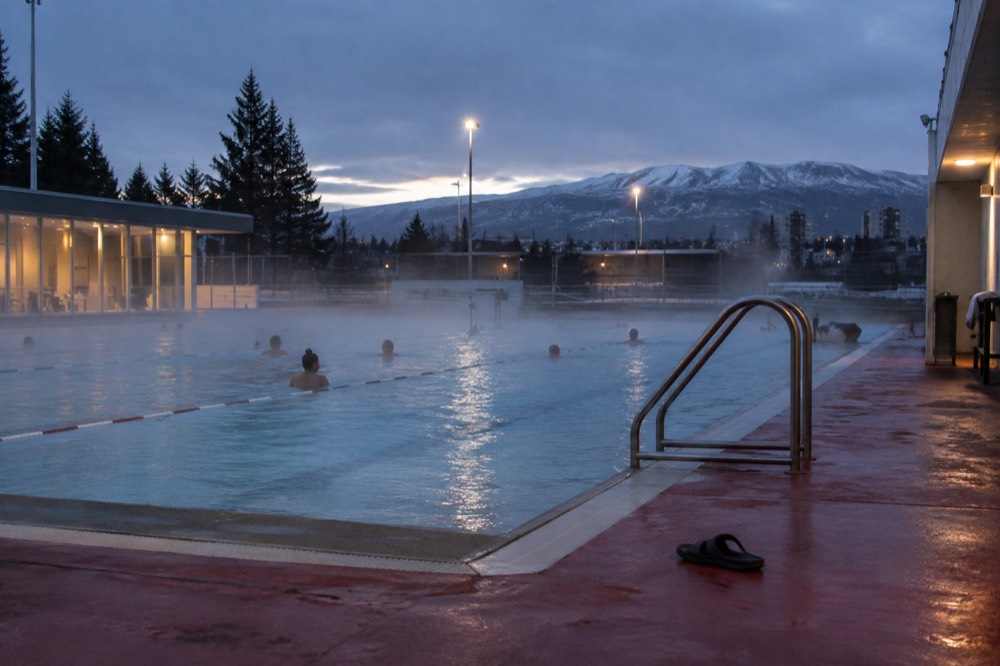
Only on Pool Night. Reykjavik's public pools charge adults 1,500 ISK under the tariff in force since May 2026, but during the Winter Lights Festival the city opens participating pools free of charge from 17:00 to 21:00 on Sundlauganótt. Outside that single festival evening, no public pool in the city is free for adult visitors.
Sundlauganótt, Pool Night, is the one moment a year when the answer flips. It sits inside Vetrarhátíð, the Winter Lights Festival, which runs in early February and stitches together light installations, a museum night and this pool evening. The catch is that only participating pools take part, so the free evening does not automatically apply to every pool in the city, and the festival's 2027 edition is announced for 4 to 7 February, with the exact Pool Night date confirmed in the festival programme each year.
The ordinary pool price is worth putting in context, because 1,500 ISK is one of the best-value tickets in the country, not a tourist trap. Laugardalslaug and the other city pools are geothermally heated outdoor complexes with hot tubs at graduated temperatures, steam rooms and lap lanes, and Icelanders build their weeks around them. The official tariff, including the concession rates, is published on the city's pool price list. If your trip does not coincide with the festival, a paid pool visit is the honest budget substitute for the Blue Lagoon, at a fraction of the spa's ticket.
| Pool entry | Price |
|---|---|
| Adult single entry | 1,500 ISK |
| Ages 10 to 17 | 400 ISK |
| Children under 10 | Free with an adult |
| Pool Night, participating pools, 17:00 to 21:00 | Free |
Is The Reykjadalur Hot River Free?
The hike and the bathing are free, but the trip is not cost-free. Reykjadalur, the hot river valley above Hveragerði, a short drive from Reykjavik by car, charges for parking at the Árhólmar lot, and no official current tariff is published, so check locally before you go. The walk up the valley and the soak in the warm stream cost nothing.
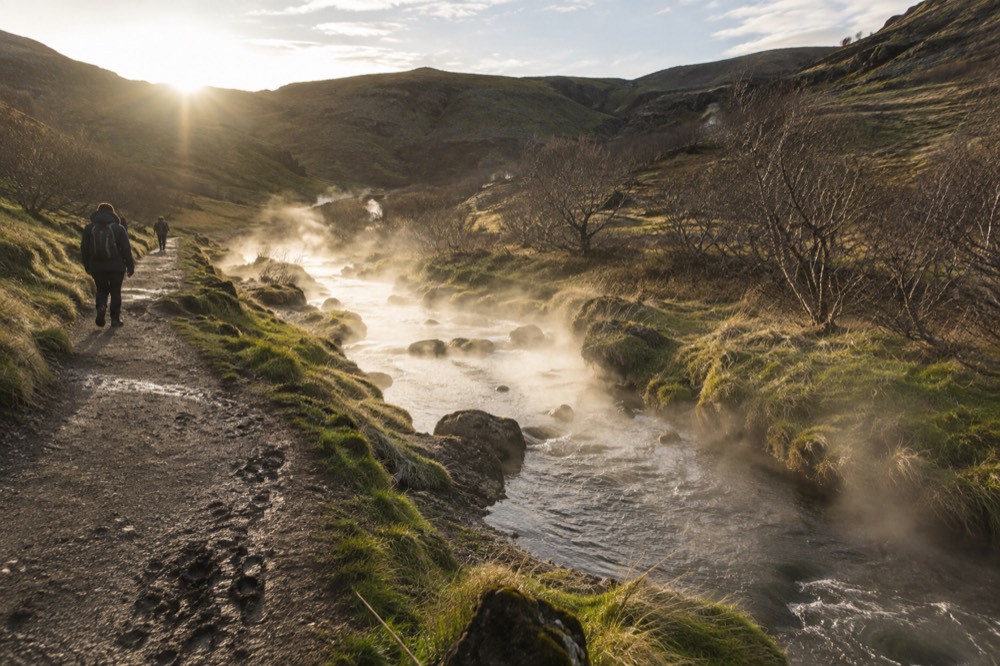
This is the option that most closely reproduces what people imagine when they picture free Icelandic hot water: a river running at bathing temperature through a green valley, no buildings, no booking, no gate. The trail climbs gently past steaming vents and sheep tracks before reaching the stretch where locals dig temporary pools into the gravel riverbed and settle in. There are basic changing shelters near the popular bend, and that is the entire infrastructure.
The honesty clause is the parking. Hveragerði's council introduced a charge at the Árhólmar trailhead lot, but the municipality publishes no current tariff, and third-party figures disagree with each other, so no number belongs on this page. Budget for a parking fee you verify on arrival, and treat everything after the car park as free. If you are building a wider trip around no-cost soaks, the free hot springs in Iceland guide collects the others that genuinely ask for nothing.
What Else In Reykjavik Is Free While The Lagoon Is Not?
Quite a lot. The Hljóðhimnar sound installation on Harpa's ground floor is free during the concert hall's opening hours, and the grounds of Höfði House, the seafront villa that hosted the famous superpower summit, are a free public lawn. Both sit within an easy walk of the centre, and neither needs a ticket or a booking.
Hljóðhimnar, in the foyer of the Harpa concert hall, is the sleeper pick. Harpa's own site states that admission to the building and to the sound installation is free, and the glass facade alone, hexagonal panels catching whatever light the North Atlantic offers, is one of the city's defining free views. Opening hours are longer into the evening from Wednesday to Saturday, so it works as a warm-up stop before dinner. Höfði's exterior is the other quiet classic: the house is best known for hosting the summit between the American and Soviet leaders, and while the interior is the mayor's reception hall, opened only by arrangement through a request-a-visit form, the grounds and the seafront are simply public space.
String those together with the Sun Voyager sculpture, the Tjörnin pond and the Old Harbour waterfront, all free, and you have a full day in the capital that costs nothing but shoe leather and an optional tip for a walking guide. That is the trade this whole page describes: the Blue Lagoon sells an hour of engineered luxury at a price set by demand, and Reykjavik itself hands out its best parts, the light, the water, the shoreline and the stories, without a gate. This stop sits on a free walking route, Spanish-Language Legends Walk.
Common Questions About The Blue Lagoon And Free Alternatives
Can You Go To The Blue Lagoon For Free?
No. The Blue Lagoon is a private, ticketed spa and every visitor needs a paid, pre-booked entry slot. The ticket price varies by season and demand and is listed on the lagoon's own booking page. No viewing area, discount, pass or bundled package makes entry itself free.
Is Nauthólsvík geothermal beach free?
No. It charges year-round under the city tariff in force since May 2026: 1,500 ISK for adults, 400 ISK for ages 10 to 17, and free entry for children under 10 with an adult. The widely repeated claim of a free summer window is contradicted by the beach's own flat-fee price list.
Is the Kvika foot bath really free?
Yes. The Kvika foot bath on the Seltjarnarnes shoreline has no entrance fee at any time of year. It is a shallow seawater pool warmed by geothermal outflow, a short walk from the nearest bus stop, with no changing facilities, so arrive ready to sit and soak your feet.
When can you get into Reykjavik pools for free?
On Sundlauganótt, Pool Night, during the Winter Lights Festival in early February. Participating pools open free of charge from 17:00 to 21:00 on that one evening. The rest of the year, adult entry to the city's public pools is 1,500 ISK.
Is Reykjadalur hot river free?
The hike and the bathing are free. The parking lot at Árhólmar in Hveragerði is charged, but no official current tariff is published, so check locally. The warm river itself costs nothing.
Is the Reykjavik City Card a way to get in free?
No. The City Card is a paid product, 6,100 ISK for 24 hours at the current official price, and anything described as free with the card is included in a pass you bought. Free with a paid pass is not free.