Do You Pay For Toilets In Iceland?
Mostly no. Public toilets in Reykjavik are free in libraries, City Hall, Harpa and shopping centres, while some standalone tourist-spot toilets charge around 200 ISK. Here is exactly where to go.
Do You Pay For Toilets In Iceland?
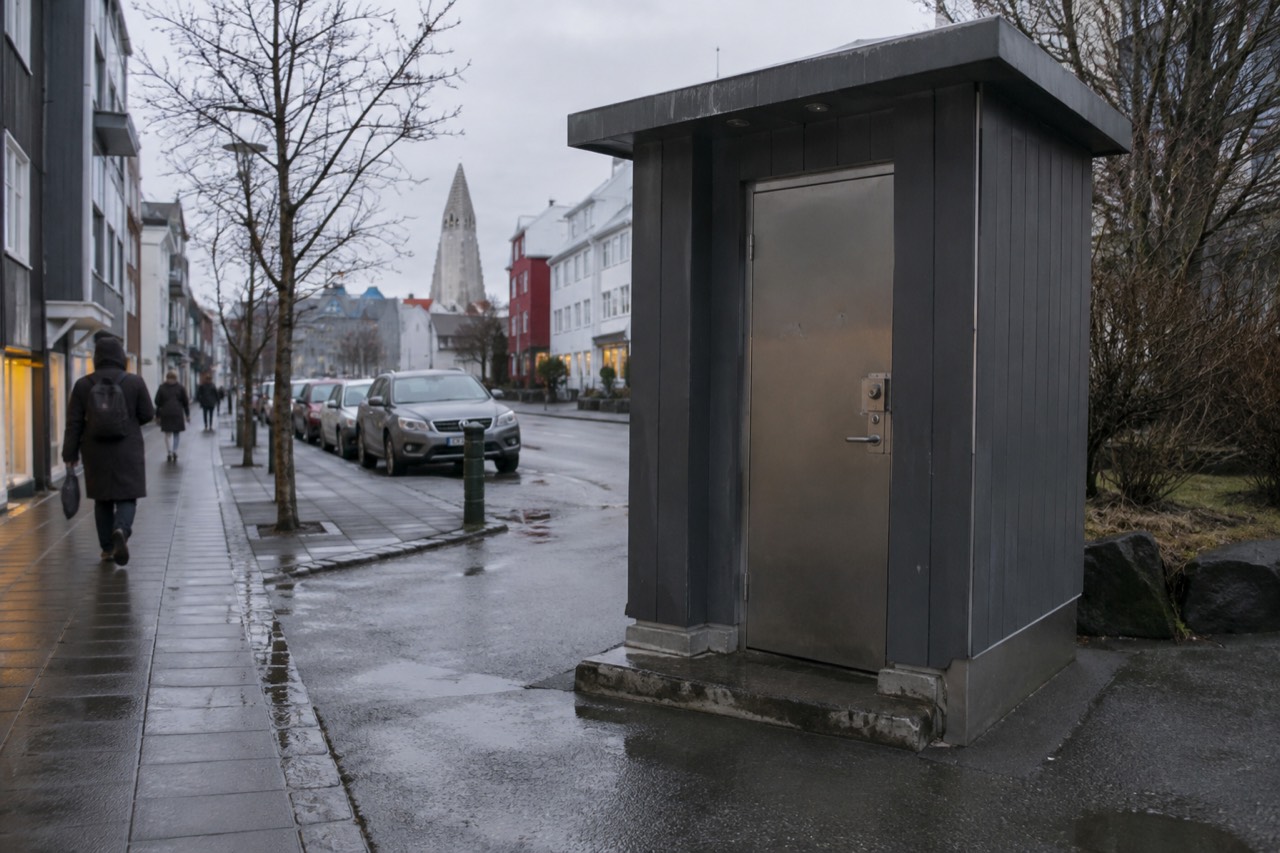
Usually not. Iceland has no national toilet fee, and most public toilets in Reykjavik are free, especially those inside public buildings such as City Hall, libraries, Harpa concert hall and shopping centres like Kringlan. The exceptions are standalone or high-traffic tourist toilets, which often charge around 200 ISK, payable by coin or card. There is no uniform citywide charge, so it varies by location.
That single sentence answers the question, but the practical version has more texture. The pattern across Reykjavik is consistent once you see it: anywhere a public employee is already on duty, the toilet is free and open to anyone who walks in looking reasonably civil. City Hall, the Reykjavík City Library branches, Harpa's foyer during opening hours and the BSÍ bus terminal for customers all fall into that group. Petrol stations typically keep their toilets free as well, with the quiet expectation that you buy something small, a coffee at petrol-station prices runs roughly 300 to 400 ISK, cheaper than almost any café in the centre.
The charge, where it exists, is a local convenience fee at the door. Reports from visitors and local guides in 2026 put the typical figure at about 200 ISK, collected by a coin slot or a card reader on the latch. It is not a national policy, it is not a tax, and it does not appear on any official city fee schedule. Some people find a locked door and assume the country charges for toilets generally; the truth is narrower and more useful to know.
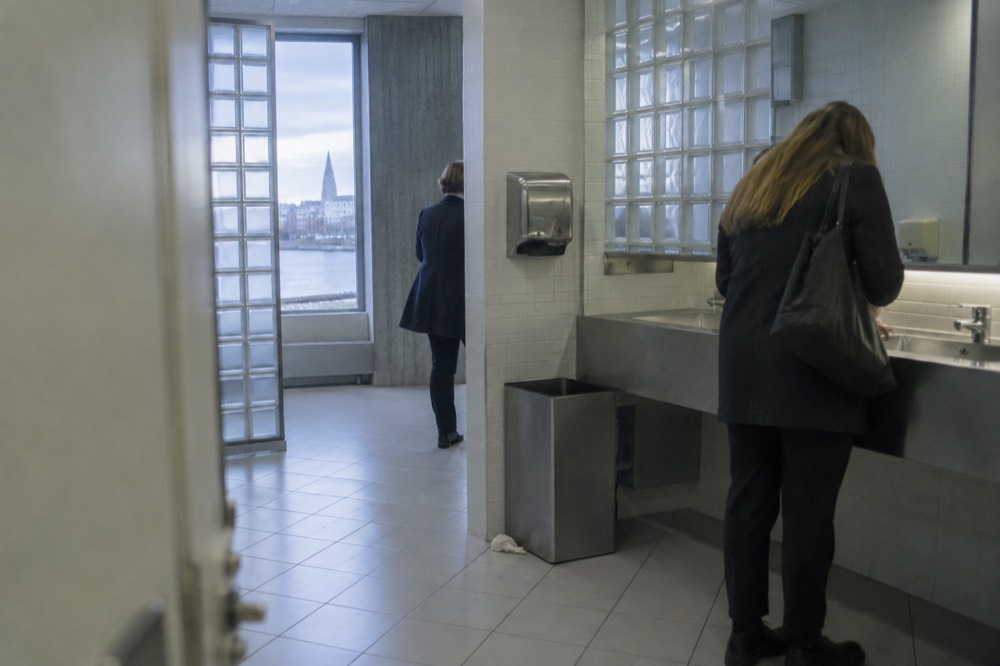
For a visitor, this makes toilet planning a routing problem rather than a budget problem. Two hundred ISK is a small amount, but the real cost of a paid toilet is usually the scramble for a coin or a card reader that declines a foreign contactless card at the worst possible moment. Knowing which buildings are free to enter turns the whole question into something you never think about again.
One more thing worth knowing before the detail: a free walking tour is a surprisingly good toilet strategy. The walks stop at or pass several of the buildings with free facilities, and a two-hour route with a guide gives you a natural window to duck inside. There are two English-friendly options in the city, and the roster is small enough to state in full.
The long-running option is the CityWalk free tour, listed on freetour.com, rated 9.6 out of 10 across 6,683 freetour.com reviews, English only, meeting in front of the Parliament building on Austurvöllur and running twice daily at 10:30 and 13:30. The smaller GuruWalk option is Sweet Streets, rated 4.6 out of 5 across 87 GuruWalk reviews, running in English and Spanish and meeting at the Harpa building, which, as we will see, is itself one of the best free-toilet buildings in the city. Both are pay-what-you-want, so neither one adds a fixed cost to the day. This stop sits on a free walking route, Morning Walk From Harpa, Cash Tips.
Where To Find Free Public Toilets In Reykjavik
The most reliable free toilets are inside public buildings: Reykjavík City Hall by the pond, the city's public library branches, Harpa concert hall during opening hours, the BSÍ bus terminal for customers, and shopping centres such as Kringlan. All of these are free to enter, no purchase is required, and the toilets sit inside the ordinary public entrance.
City Hall is the quiet champion of this list. It sits right on the northern corner of Tjörnin, the pond that every visitor ends up walking around anyway, and its ground floor is a public space with exhibitions and a view over the water. The building's public status means the toilets are treated as part of the public realm. If you are doing the classic centre loop, pond to Laugavegur, City Hall is the natural first stop.
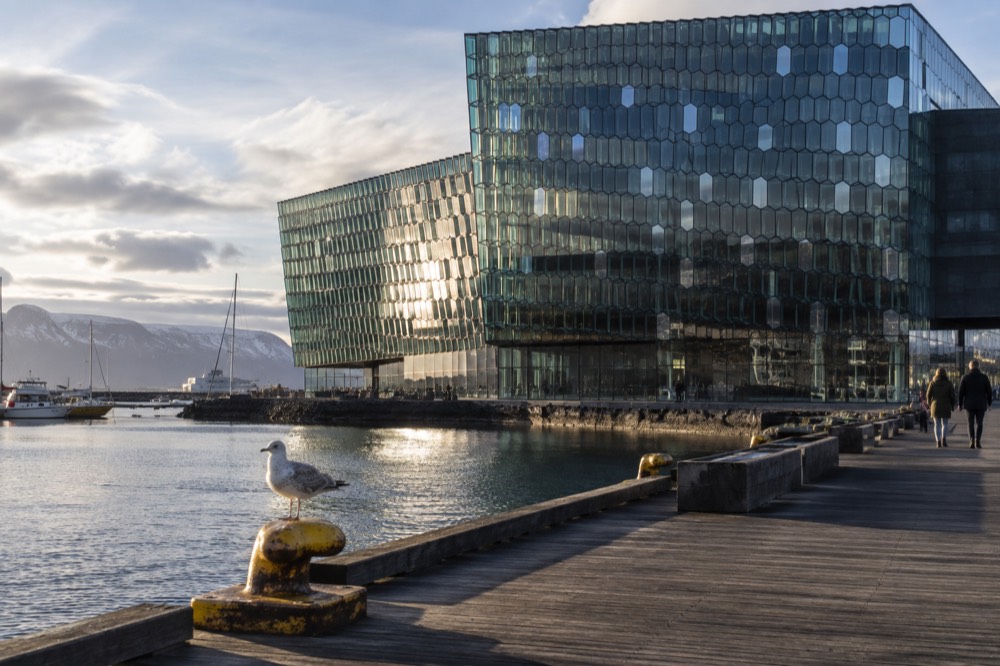
Harpa deserves its own paragraph because it combines two free things at once. Admission to Harpa and to the Hljóðhimnar sound installation on its ground floor is free, per the venue's own welcome page, and the foyer toilets come with that admission. Opening hours are Sunday to Tuesday 10:00 to 18:00 and Wednesday to Saturday 10:00 to 20:00, so an evening visit works on most days of the week. The building sits on the old harbour waterfront, a short walk from the centre, and there is a full guide to Harpa concert hall and its free foyer on this site. A free walk covers this ground: Spanish-Language Legends Walk.
Libraries round out the set. Entry to Reykjavík City Library is free to everyone; only a borrowing card costs money, at 3,300 ISK per year, and that is irrelevant to a visitor who just needs the facilities. The main branch sits on Tryggvagata near the harbour, inside comfortable walking distance of Harpa, City Hall and the Grandi district. Between those three buildings, the whole central peninsula is covered by free-to-enter toilets during daytime hours.
Shopping centres behave the way shopping centres do everywhere: Kringlan's facilities are free for shoppers, and the same logic applies to the BSÍ bus terminal, where toilets are free for customers, which in practice means anyone with a bus ticket or a moment of confidence. A practical note for winter visitors: the free-building strategy works during opening hours, which in Iceland means roughly 10:00 to 18:00 in the darker months. Outside those hours the paid standalone toilets, covered next, are the ones still lit up.
Which Toilets Charge, And How Much
Standalone and high-traffic tourist toilets charge around 200 ISK, payable by coin or card at the door. There is no official city tariff behind this, no single operator, and no receipt; it is a per-location convenience charge. Public buildings never charge, and petrol-station toilets are typically free with a purchase.
The charged toilets cluster where foot traffic is highest and no public institution is footing the cleaning bill. Visitor reports and local guides in 2026 describe the same pattern: coin or card latches on standalone facilities, and a small charge at some of the busiest sightseeing spots. Two hundred ISK is the figure that appears again and again, and it is worth treating as a planning range rather than a promise, since each door sets its own price and some take only coins, a genuine problem in a country where almost nobody carries cash.
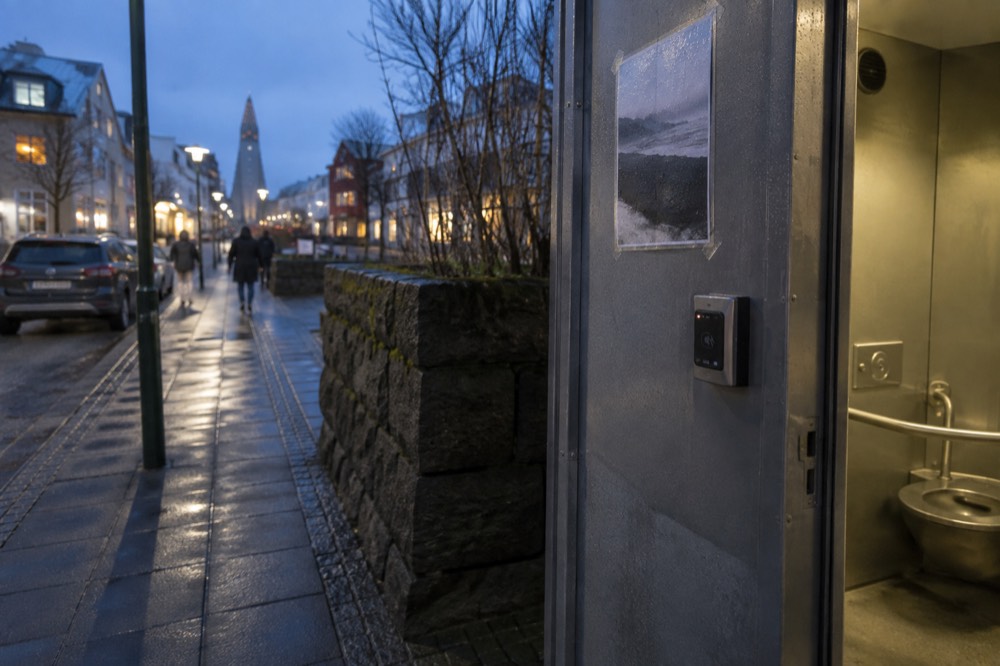
The practical defence is a card that works. Contactless foreign cards occasionally fail on small unmanned readers, so if you are travelling in a group, one person's card that works at a latch is worth more than a pocket of Icelandic coins you will never spend elsewhere. If a reader declines, do not assume the toilet is broken; walk to the nearest public building instead.
Here is the full picture in one table, drawn from the city's own pages and 2026 visitor reports.
| Location type | Charge | Notes |
|---|---|---|
| City Hall | Free | Public building, open during visiting hours, on the pond |
| Public library branches | Free | Entry free to all; only a borrowing card costs 3,300 ISK a year |
| Harpa foyer | Free | During opening hours; Sun–Tue to 18:00, Wed–Sat to 20:00 |
| BSÍ bus terminal | Free for customers | In practice, anyone passing through |
| Kringlan shopping centre | Free | Standard mall facilities |
| Petrol stations | Free with purchase | Coffee around 300–400 ISK is the usual goodwill buy |
| Standalone tourist-spot toilets | Around 200 ISK | Coin or card at the door, varies by location |
One trap deserves a warning because it looks like a free thing and is not. The Nauthólsvík geothermal beach is sometimes described as free in summer; the official tariff says otherwise, with a flat entrance pass year-round and no seasonal free window. The Reykjavík City Card is paid too, at 6,100 ISK for 24 hours, so anything described as "free with the City Card" is a paid benefit wearing a free label. Neither of these is a toilet strategy, but both show up in the same "what is actually free here" conversation, and this site keeps the distinction strict. For the wider picture of what costs nothing in the capital, the free things to do in Reykjavik guide lists the genuinely free attractions building by building.
Swimming Pools, Petrol Stations And Other Reliable Stops
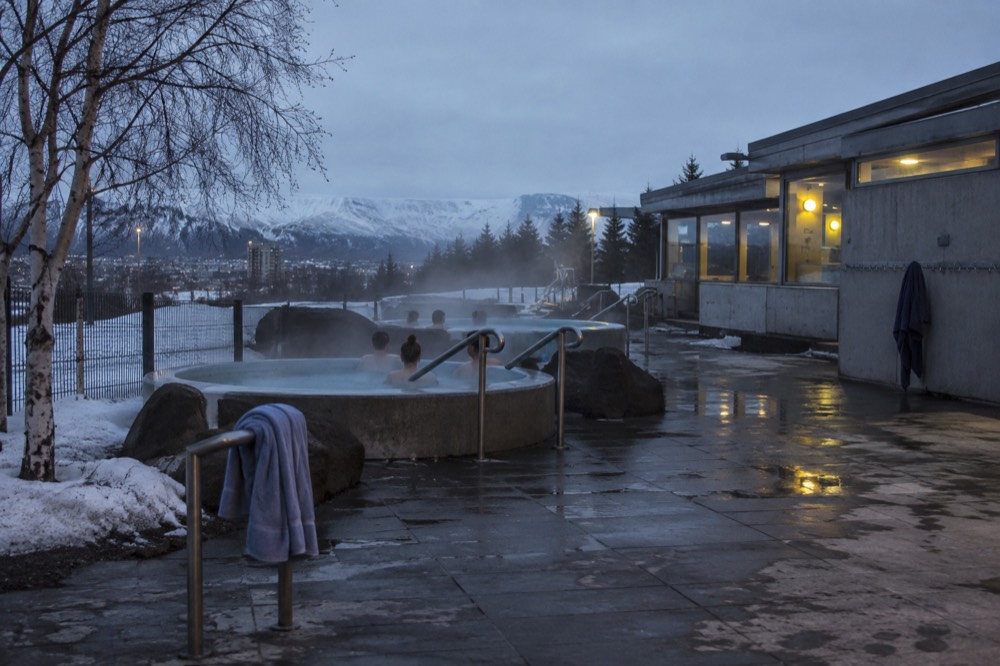
Reykjavik's public swimming pools are paid, at 1,500 ISK for an adult under the tariff in force since May 2026, but they are the most reliable and cleanest toilet-and-shower stops in the country. Petrol stations are the rural equivalent: free toilets with an unspoken purchase expectation. Both beat hunting for a coin-latched stall.
The pool point surprises people because pools feel public. They are public, but public in the Icelandic sense: subsidised, cheap, and tariffed. Adult entry is 1,500 ISK, children 10 to 17 pay 400 ISK, and under-10s enter free with an adult, per the city's official pool price schedule. That 1,500 ISK buys you a heated outdoor pool, hot pots, a shower, and facilities you can actually plan a day around, which is more than any 200 ISK latch will ever give you. Laugardalslaug, the largest pool in the city, doubles as a legitimate rest stop on any long walking day, and the nautholsvik-geothermal-beach guide covers the paid beach on the same stretch of coast.
Outside the city, petrol stations carry the load. Iceland's rural road network is dotted with N1 and Olís stations, and their toilets are typically free, with the understanding that you buy something. Given that a petrol-station coffee runs 300 to 400 ISK, roughly half the price of a downtown cappuccino at 700 to 900 ISK, the goodwill purchase is barely a penalty. On a ring-road drive, the station is the toilet plan; there is no second plan.
Back in the capital, the free walking tours slot into this logistics question better than they get credit for. The CityWalk route starts at Austurvöllur, passes the pond and City Hall, and finishes at City Hall itself, which means the walk begins and ends at free-toilet buildings. It runs every day at 10:30 and 13:30, two hours, about 2 km, and it is listed on freetour.com where it carries a rating of 9.6 out of 10 across 6,683 reviews. Bookings open only about five days ahead and are capped at six people per booking, so a family should reserve promptly. There is a fuller breakdown in the free walking tour Reykjavik guide.
The GuruWalk alternative, Sweet Streets, meets inside Harpa by the Rammagerdin store, which again means the meeting point is a free-toilet building with long opening hours. It runs Monday, Thursday, Friday, Saturday and Sunday at 11:00 in English, it is rated 4.6 out of 5 across 87 GuruWalk reviews, and it takes cash tips only, so bring some Icelandic notes if you plan to reward the guide. Both GuruWalk walks cancel free, with the guides asking that you cancel rather than no-show, and no deadline or fee is published for that.
What To Know Before You Rely On Any Of This
Opening hours, not prices, are the real constraint. Free building toilets close in the early evening, the paid standalone ones stay lit later, and in winter the whole city narrows its hours. Carry a working contactless card, expect around 200 ISK where a charge exists, and treat petrol stations and pools as the dependable fallbacks outside the centre.
Hours first. Harpa's foyer closes at 18:00 three days a week and 20:00 the other four. City Hall and libraries keep ordinary office-adjacent hours. In December, with the sun setting mid-afternoon, a visitor who finishes a museum at 17:00 and then looks for a toilet will find the free buildings already dark. The paid standalone toilets and the petrol stations are the evening options, and the pools stay open late, Laugardalslaug well into the evening year-round.
Cash is nearly dead in Iceland, which cuts both ways. Most doors take cards, which is convenient, but the rare coin-only latch is a problem when nobody carries coins. If you take the Sweet Streets walk, cash matters for a different reason: the tip is the entire payment, and the walk is cash only. GuruWalk suggests somewhere in the 15 to 50 euro range per person for its tip-based walks generally, and Icelandic tipping guidance for free tours lands around 2,000 to 5,000 ISK per person. That is a real budget line, not a rounding error, and it belongs in the same mental folder as the 200 ISK toilet charge: small, occasional, and avoidable with planning.
Beyond the city, the calculus changes. Heiðmörk nature reserve, 3,200 hectares of free trails and berry patches southeast of the capital, has no toilet infrastructure to speak of at trailheads, so the rule becomes: use the last petrol station before you leave town. The Heiðmörk nature reserve trails guide covers what the park offers once you get there. The same applies to Mount Esja, the mountain that dominates the city's northern skyline, whose trailheads are free to hike but offer nothing in the way of facilities. Nature in Iceland is free; plumbing is municipal.
For anyone mapping the whole day around free stops, the Reykjavik attractions map guide places the free buildings, the sculpture spots and the pool in one walkable cluster, which is essentially a toilet map with better scenery.
A Simple Rule Of Thumb For Toilet Stops In Iceland
When a toilet question arises, head for a public building first, a petrol station second, and a coin-latched stall only as a last resort. In Reykjavik that means City Hall, a library, Harpa or Kringlan during the day, and pools or stations after dark. Budget around 200 ISK for the rare paid door and carry a contactless card that works.
The rule compresses everything above into one habit. Public buildings are free and everywhere in the centre; stations are free with a purchase and everywhere on the roads; the charge exists only at a handful of standalone doors and never inside a public building. If you remember nothing else, remember that the buildings with staff at the desk never charge at the toilet door.
It is also worth repeating what this site is: a directory of free things, published by Free Things To Do In Reykjavik, pointing at other people's tours and the city's own public spaces. The walks above are run by independent guides and listed on freetour.com and GuruWalk, and the toilets are run by the city, the church, the concert hall or whoever owns the door. Nothing here is operated by this site, and every figure above comes from an official page or the operators' own listings.
Iceland, in the end, is one of the easier countries in Europe for this particular question. The charge is small, the free options are dense, and the only real failure mode is arriving at a dark library at 18:01 in February with a card the latch does not like. Plan the day around the free buildings, keep a 200 ISK expectation in your head for the exceptions, and the question in this article's title stops mattering by your second morning.
If you want to stretch the day beyond the centre, the same logic holds at the bigger free outings: the old harbour and its free waterfront walk keeps you within reach of Harpa's facilities, while the Esja trail and the Reykjadalur hot river hike are strictly bring-your-own-plumbing, with the last reliable toilets at the trailhead car parks and the nearest petrol stations before them.
Common Questions About Toilets In Iceland
Do You Pay For Toilets In Iceland?
Usually not. Toilets in public buildings such as City Hall, libraries, Harpa and shopping centres are free, while some standalone or high-traffic tourist toilets charge around 200 ISK by coin or card. There is no national or citywide fee, so it depends entirely on which door you are standing at.
How much do paid toilets in Reykjavik cost?
Around 200 ISK is the figure that recurs across 2026 visitor reports and local guides. It is a per-location convenience charge set by whoever operates the door, not an official tariff, and some latches take coins only while others take contactless cards.
Are petrol station toilets free in Iceland?
Typically yes, with the expectation that you buy something. A petrol-station coffee runs roughly 300 to 400 ISK, which makes the goodwill purchase cheaper than a downtown café coffee and the toilet effectively free.
Are swimming pool toilets free to use in Reykjavik?
Only with pool entry, which is paid: 1,500 ISK for an adult under the tariff in force since May 2026, 400 ISK for ages 10 to 17, and free for under-10s with an adult. The entry fee covers showers, hot pots and facilities, so a pool visit is a reliable paid rest stop rather than a free one.
Do I need cash for toilets in Iceland?
Almost never. Most paid latches take cards, and the free building toilets take nothing at all. Cash matters more for free walking tours: the Sweet Streets GuruWalk takes cash tips only, and on a pay-what-you-want walk the tip is the entire payment, so bring notes if you plan to join one.
Where are the best free toilets in central Reykjavik?
City Hall on the pond, the main public library on Tryggvagata, Harpa's foyer during opening hours, and Kringlan shopping centre. All are free to enter, no purchase needed, and all sit within the walkable centre or a short bus ride, with children 11 and under riding Strætó buses free.